Robert Andrews Millikan Quotes
Three ideas stand out above all others in the influence they have exerted and are destined to exert upon the development of the human race: The idea of the Golden Rule, the idea of natural law, and the idea of age-long growth, or evolution.
Robert Andrews Millikan, 1868-1953, Physicist, Quoted in Forbes Magazine Quotations
Sourced by: Eigen's Political and Historical Quotations


In many nations, including the United States on occasion, governments have made laws as to what is valid science and what is not. Tennessee and other Bible-Belt States have and still do on occasion. The latest being Evolution, which even in the beginning of the 21st century, Kansas determined that it was not proven science, when it is as proven as any science has ever gotten.


When earlier that year, Charles Darwin had published his, "On the Origin of Species". For many, the new ideas undermined the role of God. For some thinkers, the thesis of evolution as then promulgated was discouraging in that it undermined the role of man in creating change—–especially reform and progressive change. Herzen, however correctly perceived that the two were quite compatiable.


Lieber in 1860 was assigned by President Lincoln to study the then international laws of war and prepare a manual for the guidance of union troops in the Civil War. Lincoln then issued the document as a general order, and much of today’s military rules of conduct came from that effort.


Darwin’s work had polarized England into two camps. Spencer was one of the major public supporters of Darwin. Tennyson expressed a similar intuitive view a decade earlier {627586}. Spencer reasoned that if an egg cell and a sperm cell could produce a human in 9 months, why was it not plausible that the cell could become a human in hunreds of millions of years.


Samuel Langhorne Clemens, 1835-1910. It was then, and still is common to refer to the results of evolution as “miracles” as Darwin had revealed the process but did not opine on the origin or creation of the process. With many religious people at the time a sensible dialogue and inquiry could be made of evolution so long as the possibility of a Supreme Being creating the mechanism of evolution remained open. Fundamentalists, however, insisted that the Bible stated that God made each of the species in its then current form and therefore they rejected even the possibility that God had created the evolutionary scheme which implemented his miracles.

Darwin who had a Protestant Christian upbringing, never precluded the possibility that God had created the universe with the Laws of Evolution and that was the mechanism He selected to allow all the species and diversity of life to develop. But he did not say that explicitly. While he found immediate acceptance and accolades from the scientific communities throughout the world, and enthusiastic approval by most educated people with the exception of theologians and clerics. Their reaction was extreme—almost apoplectic. The book as a best seller and they sold out with each successive printing. In the 6th edition, Darwin not only was explicit about the role the Deity might have had, but Darwin stated that he personally believed that He was the impetus to the creative process. Ironically, almost all the social and political opponents of Evolution have never read Darwin’s work (or much else on the subject) and certainly do not realize that the man they accuse of leaving God out of the Creation, actually believed that God was the critical element and he and other evolutionary scientists were just discovering God’s laws. Dr. Huxley and some other supporters of Darwin were disappointed with this change in the 6th edition, as they were atheists and believed that there was no deity involved in the creation. Today, there are evolutionary scientists who are on both sides of the issue. They just disagree on this point, but they work together on everything else.


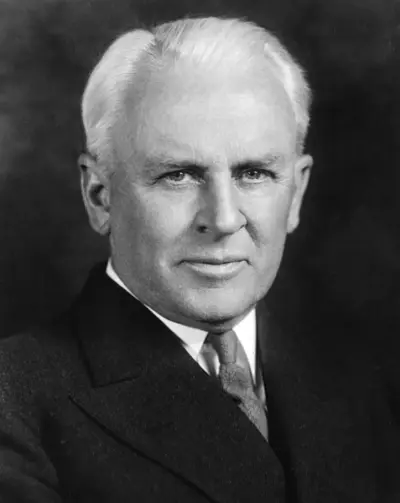
Robert Andrews Millikan was an American experimental physicist honored with the Nobel Prize for Physics in 1923 for the measurement of the elementary electric charge and for his work on the photoelectric effect.
