William Jennings Bryan Quotes
Science is a magnificent force, but it is not a teacher of morals. It can perfect machinery, but it adds no moral restraints to protect society from the misuse of the machine. It can also build gigantic intellectual ships, but it constructs no moral rudders for the control of storm tossed human vessel.
William Jennings Bryan, 1860-1925, U. S. Secretary of State, U. S. Congressman (Democrat, NB), 3 Time Unsuccessful Democratic Presidential Candidate, Scopes Trial, Prosecution Summation, Tennessee, May 1925
Sourced by: Eigen's Political and Historical Quotations

Bryan participated as a prosecutor in the infamous Scopes Trial in Tennessee where a school teacher was convicted of a crime for discussing the idea of evolution in a high school classroom. He had written this for his summary to the jury, but the summaries were dispensed with when it was obvious that Scopes would be convicted. He had admitted to breaking the law, but the law itself was on trial.


Samuel Langhorne Clemens, 1835-1910


A teacher had been arrested and threatened with jail because he had taught Darwin’s Theory of Evolution in a high school science class. The ACLU paid for famed attorney, Clarence Darrow, to defend Scopes in the famous trial that exposed the ignorance and bias of the schools that prohibited teaching about evolution as it contravened the Protestant fundamentalist Biblical version of the creation of humans. While the ACLU had a major victory, even today many school systems—mostly in the South—still prohibit such teaching and while no teacher can be jailed, they can be fired for not following the curriculum of the local school board.

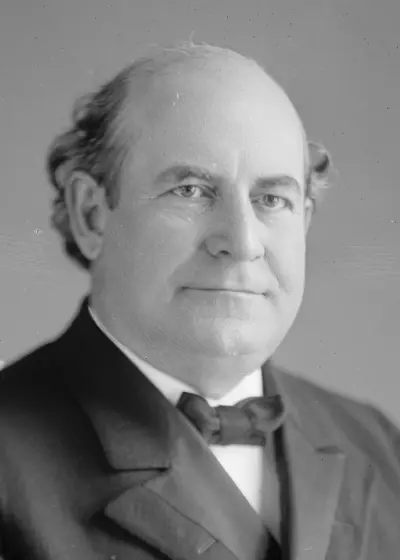
William Jennings Bryan was an American orator and politician from Illinois and Nebraska. Beginning in 1896, he emerged as a dominant force in the Democratic Party, running three times as the party's nominee for President of the United States in the 1896, 1900, and 1908 elections. He also served in the United States House of Representatives and as the United States Secretary of State under Woodrow Wilson. Because of his faith in the wisdom of the common people, he was often called "The Great Commoner".
