Ahmad Jannati Quotes
Thoughts of the President have to be in line with the thoughts of the Supreme Leader.
The President’s and the Parliament’s actions are all subject to the veto of the Guardian Council and the Supreme Leader—self perpetuating Islamic clerics. This is the statement that explained their action of disqualifying over 1000 candidates for Parliament and the Presidency leaving only 6 who were acceptable. Then the people have a right to vote from among the 6 and can be assured that their President will not have an original thought or have any views different from the Supreme Leader, Ayatollah Sayyid Ali Khamenei.
Ayatollah Ahmad Jannati, Chairman of the Iranian Guardian Council, Quoted in -e-Ghalam Iranian newspaper, May 23, 2005
Sourced by: Eigen's Political and Historical Quotations

This verse has been one of the bases of Muslim theocratic states like Iran’s claim to legitimacy.


Over 1000 people had registered to be candidates in the Iranian national election. However, under the Iranian Islamic Constitution all candidates have to be approved by the Guardian Council of Ayatollahs who are appointed by the Supreme Leader, also appointed. The Guardian Council found that all candidates but 6 were not worthy enough Muslims to be allowed to run for public office. 2 of the over 1000 rejected candidates were very prominent Iranians. The Supreme Leader made this statement which seems very reasonable and democratic until his order to the Guardian Council is considered. He ordered them to reconsider 2 or the 1000 rejected candidates.
This verse has been one of the bases of Muslim theocratic states like Iran’s claim to legitimacy. The word “govern” is sometimes translated as “judge.” In the context of the 6th century, there were no separation of powers as we know them and judging, governing and legislating were melded.


This particular quotation is very important. Khomeini was probably the most influential Muslim in the 20th Century. The fact that he wrote this in 1942—before there was an Israel as an enemy—shows how deep seated the requirement for world conquest is. To the Nazi’s world conquest was a justifiable goal. To Khomeini and his many followers, it is a religious obligation and duty and thus is every more dangerous. Extreme anti Muslims justify the attempted expulsion of Muslim immigrants on the grounds that they are a fifth column whose loyalty is and will be to the religion which will attempt to conquer their country. It gives Islamaphobia a veneer of respectability.


America’s first political economist. This is a wonderful quotation which shows the compromises that even a great president like Abraham Lincoln had to act when Congress passed must have bills.

They are so different that most people in the West think of what Khamenei describes as “religious democracy” as not even close to democracy—almost the antithesis of democracy, and Islamic fundamentalists perceive Western democracy as sinful and evil.


This quotation which appears absurd on the surface given Iran’s terrible record with religious minorities provides insight to Islamic orthodox thought. For the orthodox Muslim, Sharia—Koranic Law—is the basis of the society. God defines the rights of people and their obligations. Whatever rights are provided by Sharia, Khomeini and some others wished to provide them equally to religious minorities also. However, those rights do not include the right to criticize the Islamic law or the leaders who implement it. That would be heresy if done by a Muslim, a Christian, or a Jew. A Christian church may not erect a public cross or ring bells on Sunday. That is prohibited by the Koran and is imposed on all. Bahai religious adherents are tracked down in the Islamic Republic and are often executed. ‘What about their rights?’ they ask. The answer is that the Bahai were Muslims who have become “backsliders” and heretics, and under Sharia, they must be executed for heresy; they are deemed to be heretical Muslims and not members of a minority religion.

Bangladesh had fared very poorly as a part of Pakistan. When it revolted and became independent, it adopted a secular government whereas Pakistan had been, and is, a heavily Islamic state. However, the vast majority of Bengalis were Muslim and some were extreme fundamentalists. Rahman was under constant pressure to make the government more “Islamic” and while he did so somewhat, he tried to advocate for separation of church and state. Bangladesh is not as extreme as Pakistan which is not yet a theocracy but religious forces dominate every aspect of the society.

While the author represents the views of most Islamic Fundamentalists, a similar view is held by many ulta-orthodox Jews and fundamentalist Christians also.


Trump refused to divest himself from his hotels and golf courses and received money from States and Foreign countries for their officials who paid the very high rates compared to other hotels and even golf courses trying to gain access and curry favor with the U. S. President. Once Tump became President, he raised the rates for his Hotel on Pennsuylvania Avenue not far from the White House from $250 a night to $500 a night. He also similarly increased the prices of a number of his other properties.
This is the philosophical root of Islamic Fundamentalist terrorism. If this principle is accepted, then it is very easy to rationalize anything to change a situation where Islam and Islamic law does not control anywhere
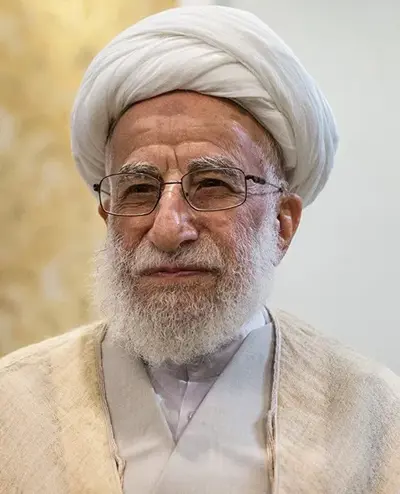
Ahmad Jannati is an Iranian Shi'i cleric and a conservative politician. He was born in Ladan, Isfahan. Jannati is known for his anti-LGBT rhetoric and opposition to secularism. He is also a founding member of the Haghani school of thought.
