Thomas Gage Quotes
This Insurrection is composed of great numbers of Sailors headed by Captains of Privateers.
He was wrong. The protesters were general including merchants, lawyers, politicians, shopkeepers, sailors and other occupations. The Privateer Captains were no more or less involved as other occupations.
Thomas Gage, 1721–1787, British Governor of Massachusetts, Commander in Chief of British Forces in North America, His theory of the insurrectionists who implemented the Stamp Act Protests, 1765
Sourced by: Eigen's Political and Historical Quotations

This quotation shows that the dissent leading to the American Revolution did not emerge suddenly in 1776 after the Battle of Bunker Hill. Dissent, sedition and even violence was documented here in 1774. Salem at the time was the second largest port in the colony and the customs tax collectors—Loyalist Americans—were run out of Salem.

It was repealed the next year, but much damage had been done to the relationship between the American Colonists and the mother country. It set the tone for American transition to a desire for independence. . Fox, a conservative on most issues was an absolute radical on the issue of America. To aggravate the hawks in parliament, he used to dress in the colors of George Washington’s uniform to show his support once the war broke out.


Americans were by no means united in wanting to take up arms against Britain. Relatively few of the loyalist quotations have come down to us, but here is one. It also illustrates why some Americans wanted complete independence: So that they could escape their debts to English merchants. Most however had more noble and unselfish motives. As a matter of fact, the American Revolution is unusual in the sense that there were so many men of substance who sacrificed much of their material wealth for the American ideal. There were also the rogues and opportunists as Galloway describes.


He was acting as French Foreign Secretary at the time.

In South Carolina, the Patriots, in reaction to the Tea Tax, did not destroy the tea, but stopped it from being landed and sold. Finally Lt. Governor Bull had the tea moved into the Customs house in Charleston. The patriots were satisfied that it was under lock and key and could not be sold or distributed and the tea tax was thus not collected. The British Secretary of State for America, however did not regard the compromise favorably.

Several years before the Battle of Bunker Hill, revolutionary activity had already broken out in the American colonies—See {634132} for an example. This law gave the British authorities much more “clout” in dealing with the “seditious” American activities. It protected English law enforcement officials from being tried in local Colonial courts for murder or assault in putting down insurrections. George Washington and other Patriots were outraged over this law. See {634131}.

This was written more than a year before the “blows” began. It took time to ship the men and supplies to America and the British did not handle that task with much efficiency.

His fear was well founded. That is exactly what the British tried to do.


This is the same man who introduced the Stamp Act 12 years before which started the whole problem in America. See {74956}.


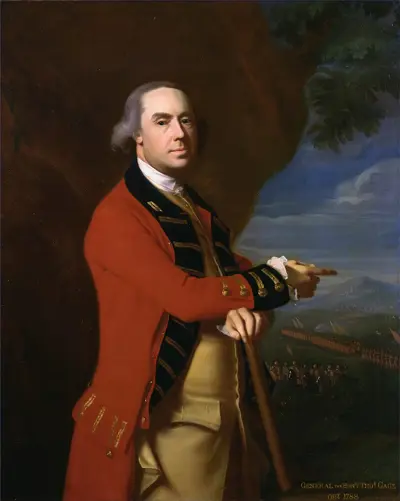
General Thomas Gage was a British Army general officer and colonial official best known for his many years of service in North America, including his role as British commander-in-chief in the early days of the American Revolution.
