Spencer Abraham Quotes
There was a Republican majority of the Senate, and it tempered the nature of the nominations being made.
Abraham, Spencer. Interview. CNN Inside Politics, Cable News Network, 2001.

The "single Senator" was Roscoe Conkling. He was the Republican Party Leader (Boss) and a great proponent of the Spoils System of giving all Federal appointments to loyal party men without regard for competency and merit. See {622341} and {622340} for Hayes’ contest with Conkling.


Originally published as The Cynic’s Word Book

Morris had it wrong. He perceived that the Senate could not be a check on the House or the President because to him, the Senate was the house of aristocrats and America really did not have aristocrats since there was no nobility so that there would be no difference between Representatives and Senators-–they both were drawn from the same egalitarian population. He missed however that the Senate, being elected by states, would represent a broader constituency than a member of the House, and because of this broader perspective, would come to see issues in nationalist and state terms while Representatives would perceive the same issues in local terms. Hence the two houses of Congress became effective checks on each other, and the Senate on the President because not of different social or economic class, but of broader and narrower perspectives. It was not what Senators were but what they would become once they were elected and had to be reelected.


Senator Conkling was the Republican Leader of the Republican Party and a party boss of the old school. Hays was a reformer, especially about appointments where he generally tried to pick the most meritorious candidate instead of the party loyalists desired by Conkling. There was (and still is) a tradition in the Senate that the Senators from the state of residence of any Presidential appointment had a veto of any Federal appointments in the state. Conkling, in addition to being the party leader, was the senior senator from New York and wanted two party loyalists for the jobs. Hayes appointed the better qualified men and decided to fight for the nomination of his candidates, but expected tha Conkling was strong enough to assure that the Senate would not confirm Hayes’ New York appointments. See {622341} for the outcome.


Periodically in American history, there has been a struggle between the Executive Branch and the Senate for dominance. The Senate’s power is negative however. It can block things, but cannot directly make them happen. The President can do both.


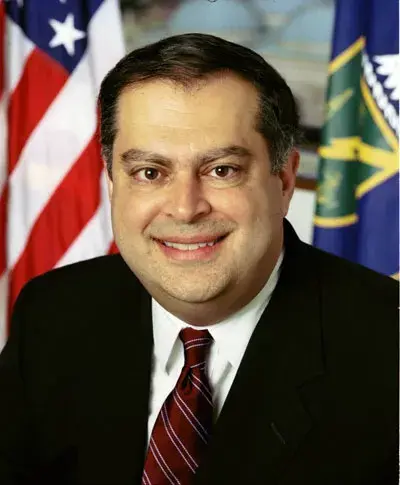
Edward Spencer Abraham is an American attorney, author and politician who was a United States Senator from Michigan from 1995 to 2001 and the tenth United States Secretary of Energy, serving under President George W. Bush, from 2001 to 2005. Abraham, a Republican, is one of the founders of the Federalist Society and a co-founder of the Harvard Journal of Law and Public Policy. As of April 2021, Abraham is the last Republican to serve as a U.S. Senator from Michigan.
