Frederick Douglass Quotes
There is not a man beneath the canopy of Heaven who does not know that slavery is wrong for him.
Douglass, Frederick. Oration, Delivered in Corinthian Hall, Rochester, by Frederick Douglass, July 5th, 1852. Lee, Mann & Co., 1852, p. 18.


Baron Brougham and Vaux


Brown was the richest man in Rhode Island and made much of his money in the slave trade. This quotation shows that slavery was not completely a North verses South split. Northerners like Brown for whose family Brown University was named, was as virulent supporter of slavery as the most ardent Southerner.

Even before we had a Constitution there was major opposition to slavery. The “price” of the American Union was the acceptance of the slavery of the South. But the hypocrisy of a country based on liberty to allow and enforce slavery was not lost on the founding fathers. Ironically the abolitionists among the founding fathers were certain that they could persuade the Southern slaveholders of the error of slavery in a few years and things would be set right in the land. Even George Washington {630626}, and Thomas Jefferson and some other slaveowners at the time wished to see its abolition. Slaveholding Southern Founding Fathers in general were so wary of the abolitionists that they achieved structural, disproportionate, power in the new Constitution to ward off the abolitionists attempts to reform slavery.


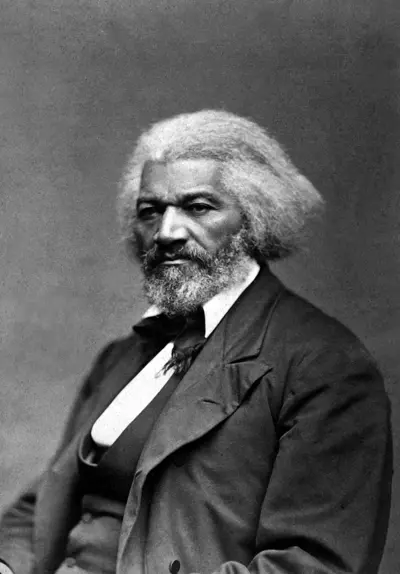
Frederick Douglass was an American social reformer, abolitionist, orator, writer, and statesman. After escaping from slavery in Maryland, he became a national leader of the abolitionist movement in Massachusetts and New York, becoming famous for his oratory and incisive antislavery writings. Accordingly, he was described by abolitionists in his time as a living counterexample to slaveholders' arguments that slaves lacked the intellectual capacity to function as independent American citizens. Likewise, Northerners at the time found it hard to believe that such a great orator had once been a slave.
