James R. Clapper Quotes
There is no requirement whatsoever for a security clearance for a candidate. The mere fact that a candidate is anointed by its party at a convention - that is all that is required. And it's not up to me or the administration to determine candidate suitability for these briefings.
Clapper, James R. Interview. Aspen Security Forum, 28 Jul. 2016.


Abraham Lincoln was the only third party candidate to win the presidency in U.S. history. However, when he was nominated, there was little conviction among Republicans that a third or fourth party could actually win:. Lincoln's primary opponent, William H. Seward

He was a liberal Republican in an era where the Republican paty was controlled by arch conservatives, the Tea Party extremists, and evangelical Protestants while Gullani was divorced, a Catholic, and lived openly with a woman to whom he was not married. He supported a woman’s right to abortion and gay rights.


This is one of the great erroneous predictions of American political history. He was not nominated on the second ballot. Nor on the third; Lincoln was


During the Republican National Convention of 1920, when the delegates were deadlocked between four candidates, Daugherty told the press:

When Lyndon Johnson was elected Vice President he, as the former Senate Majority Leader, wanted to lead the Democratic Senate Caucus. Gore objected because he thought that violated the separation of powers between the Executive and the Legislative branches, and he wanted the Senate to be independent from the administration. Despite Gore’s objection, Johnson was elected.

The president had just been nominated for a second term. A Union League delegation called on him to offer their congratulations:


Eisenhower prior to entering politics was very inexperienced and innocent.
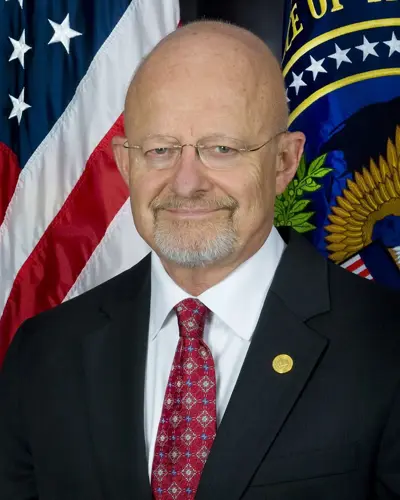
James Robert Clapper Jr. is a retired lieutenant general in the United States Air Force and is the former Director of National Intelligence. Clapper has held several key positions within the United States Intelligence Community. He served as director of the Defense Intelligence Agency (DIA) from 1992 until 1995. He was the first director of defense intelligence within the Office of the Director of National Intelligence and simultaneously the Under Secretary of Defense for Intelligence. He served as the director of the National Geospatial-Intelligence Agency (NGA) from September 2001 until June 2006.
