John F. Kennedy Quotes
The team doesn't run for the presidency, one man runs for the presidency.
John F. Kennedy, 1917-1963, 35th President of the United States (Democrat, MA), Quoted in The Washington Post, October 24, 1988
Sourced by: Eigen's Political and Historical Quotations

This is one of the great erroneous predictions of American political history. He was not nominated on the second ballot. Nor on the third; Lincoln was


Describing Republican Senator Robert M. La Follette, 1924 Progressive party candidate for President:


He saw Obama’s name as a fatal problem with the American Electorate which turned out to be more tolerant than Brown gave them credit for.


World War I veterans had been promised bonuses for their service, but Congress and the President would not deliver. The economy was terrible and thousands of veterans came to Washington, set up a camp in Anacostia, and asked for help and their bonuses. Hoover had given orders to General Douglas MacArthur to remove the protesters from government buildings, but MacArthur, establishing a pattern that he would follow throughout his career, exceeded he orders and chased the protesters all the way back to their tent camp and then destroyed the camp. The Great Depression was raging and the protesters had no other place to live, and Hoover opposed any direct federal aid to the poor and needy making the Depression even worse. The public reaction was shock and anger. Hoover, however, demonstrating political character and integrity, took the responsibility and did not blame MacArthur. It was the nail in Hoover’s political coffin. Roosevelt easily won the election.


During the last days of the 1912 "Bull Moose" campaign, President Taft's running mate, Taft’s Vice President James S. Sherman, died just before election day. Nicholas Butler was asked to take his place on the Republican ballot; he agreed with this famous condition. The election was won by Democrat Woodrow Wilson and Butler was off the hook.

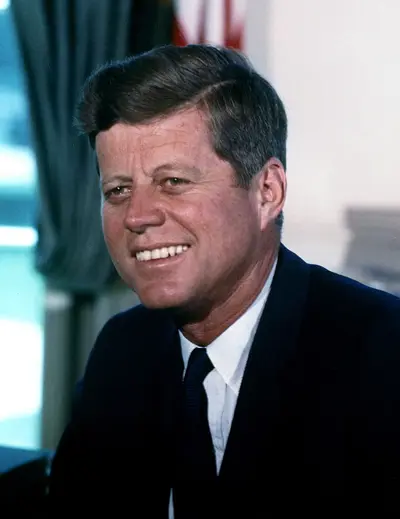
John Fitzgerald Kennedy, often referred to by his initials JFK, was an American politician who served as the 35th president of the United States from 1961 until his assassination in 1963. Kennedy served at the height of the Cold War, and the majority of his work as president concerned relations with the Soviet Union and Cuba. A Democrat, Kennedy represented Massachusetts in both houses of the U.S. Congress prior to becoming president.
