Shimon Peres Quotes
There are two things that you should never do in front of the TV cameras. You should not make love and you should not make peace.
In the modern media age, there is intense pressure on peace negotiators to reveal progress, problems, reactions, suggestions that are made by the parties to the peace talks. Rumors and premature public knowledge of the details of peace talks often can undermine and sometimes destroy and progress that was being made.
Shimon Peres, Prime Minister, Israel (Labor), Nobel Peace Laureate, Quoted on CNN, The Global Public Square, July 28, 2013
Sourced by: Eigen's Political and Historical Quotations

In the history of diplomacy and peace treaty negotiations, the various national representative would meet in secret, negotiate treaties and add secret clauses. Then the treaty was finally made public for approbal or ratification in the different countries no one would be told of the secret clauses. Each side would have a written secret copy of these clauses, but the publics of the country would never know. For example, the agreements about various WWII issues that were secret have not yet been made public in the United States or England. Wilson wanted to put an end to that diplomatic ploy and wanted all the peace treaty clauses to be public with nothing secret. He also wanted the deliberations to made in public woth press access. He had little support for the idea in most European nations.


The leaks not only did not stop, but they became worse than ever.


The Secretary of State had obtained an agreement of Israel and the Palestinians to open Peace Talks. The press immediately wanted to know who was saying what to whom and what positions the parties had. However, this was a classic example where transparency would make successful negotiations impossible—it would end the negotiations before the parties could even discuss possible alternatives.


Kennan was talking about the Russians, but the same principle seems to hold with any autocratic government and in some cases even democracies. However, the tradition of secret diplomacy with no transparency is established even in many democracies. Great Britain and France, for example conduct most of their diplomacy in secret as do less democratic governments and tyrannies. They expect us to keep negotiations confidential, which causes American diplomats to be torn between the American view of transparency and the tradition of confidentiality.

The Arab culture, like most desert cultures, maintains a degree of hospitality that is much greater than that of most other cultures. Even enemies are granted hospitality. This sometimes confuses Western diplomats who might interpret the friendly hospitality as institutional friendship but it often is nothing more than the gracious hospitality that is expected in Arab society.

Hezbollah, like the IRA, is both a terrorist organization and a political party.


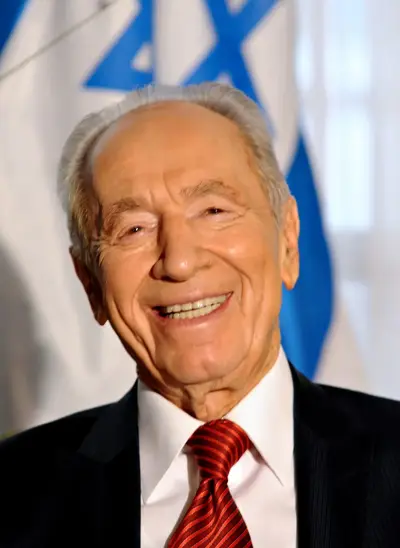
Shimon Peres was an Israeli politician who served both as ninth President of Israel, (2007–2014) and Prime Minister of Israel, as well as Interim Prime Minister. He was a member of twelve cabinets in a political career spanning nearly 70 years. Peres was elected to the Knesset in November 1959 and, except for a three-month-long hiatus in early 2006, was in office continuously until 2007, when he became President, being in that role for another seven years. At the time of his retirement in 2014, he was the world's oldest head of state. He was considered the last link to Israel's founding generation.
