Andrew Melville Quotes
There are two kings and two kingdoms in Scotland, there is Christ Jesus and His kingdom … whose subject King James VI is, and of whose kingdom not a king, nor a head, nor a lord but a member.
Andrew Melville, 1543-1591, Scottish Presbyterian Reformer, Statement to King James, Falkland Palace, Scotland
Sourced by: Eigen's Political and Historical Quotations

England had, under Henry VIII, left the Roman Catholic Church where the King replaced the Pope as head of the English Church. Henry’s successors then had to organize and manage the national Christian church. James was discussing the hierarchy of the Church of England and there was a suggestion that Bishops be eliminated and have every priest directly responsible to the crown. Bishops would be powerful figures who might form a power center. (They did later). However, King James I observed that the King is God’s choice and rules by divine right. So there had to be bishops to crown kings. The bishoprics were retained.

At the time the Dutch Reformed Church was the official state religion of the Netherlands.


This passage was one of those used by Christian apologists for slavery. Critics of some Christian churches point to this passage as illustrating the lack of morality in traditional Christianity when it same to fundamentals such as human slavery. In this particular quotation, the slave master is likened to Christ. Ironically, it was Christian abolitionists in England and the United States who saw other passages of the New Testament and the Gospel of Christ as disapproving of slavery and those Christians where among the most effective of the abolitionists.

Alfonso the Learned. He personally wrote a History of Spain up to the time.

Although James’ mother, Mary Queen of Scots had been a Catholic, James was a fervent Protestant. However, he found the separation of the State from authority over the church and the Presbyterian approach not to his liking. Also, the early tradition of the Presbyterian preachers scolding the monarch, especially his mother, was uncomfortable for James.


_0_thumbnail_47x47.jpg "Statue of Robert Hall in Leicester.")
Many of the founding fathers were aware of such views in England as the same issues were being debated in America in the debates on Ratification of the Constitution and the required inclusion of the Bill or Rights—specifically the First Amendment.


Jefferson was a deist but had little love for the organized religions and did not consider the Bible as the revealed word of God.

Some of the founding fathers were deeply religious men while others were not so. Some varied in their believes at different times of their lives, and a number were not very favorable towards orthodox religion. At the time, Roman Catholic and Protestant churches were persecuting other religions throughout Europe and people were still being killed for their “heretical” beliefs. Most important to some of them, kings and other monarchs whom they abhorred, all at the time claimed the Divine Right of Kings and the established churches were the most important support for monarchs. At the time most organized religions were opposed to freedom of conscience and certainly opponents of separation of church and state. American churches tended to take on American values but were never given the chance to dominate the American government they way many religions had in Europe and the rest of the world.

His positions presaged some of those of Protestants in the Reformation. In the great struggle of the time between the Pope and the Emperor, Marsilius was the leading advocate for the emperor’s superiority of authority. The Pope wrote a condemnation of these ideas.


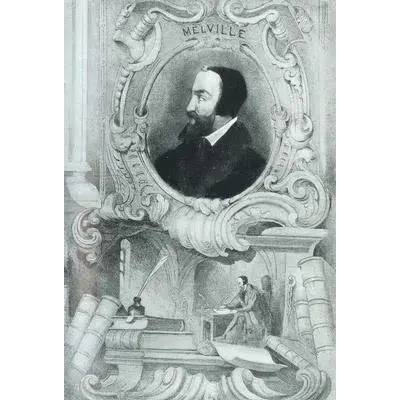
Andrew Melville was a Scottish scholar, theologian, poet and religious reformer. His fame encouraged scholars from the European continent to study at Glasgow and St. Andrews.
