Mustafa Akyol Quotes
There are strengths in Islamic tradition. Islam actually, as a monotheistic religion, which defined man as a responsible agent by itself, created the idea of the individual in the Middle East and saved it from the communitarianism, the collectivism of the tribe.
Akyol, Mustafa. "Faith versus tradition in Islam." TED, Feb. 2011.


Ironically, while Radical Fundamentalist Muslims abroad claim that Western materialism and dem0cracy is not only anti-Islamic but a danger to Islam, in America there has been a growing and thriving Islamic community which has had far less difficulty reconciling their religion and American democracy and values than have other religions such as the Amish and orthodox Jews. This ease of the transition and Islamic compatibility with modern America is perhaps the central reason for the hatred of America. Aslan argues that the Muslim reformation is succeeding very smoothly in America and is the model for Muslims throughout the world.


Turkey under its great leader, Ataturk, underwent a major cultural revolution. Although Turkey is overwhelmingly Muslim, its constitution provides that it be a secular state with compulsory public non-sectarian education. They adopted a European style law and prohibited Sharia (Islamic law). The nation thrived as no other Muslim country has. Muslims, the world over, are divided on Turkey. For this Sheikh its secular government is an insult to Islam because there is complete separation of mosque and state. For others it is the model which all Muslim countries should emulate.

His views are a mix of modernism and fundamentalism. He favors democracy and elections but also favored the Taliban destroying the great ancient Buddha statues when he was called an idol worshipper for urging the preservation of art.


Unfortunately, the vast majority of Islamic clergy would not agree with his definition. Some of the Islamic modernists share his view, but there are relatively few of them in the Muslim counties and most reside in the West.

He is often referred to as The Reformer as he was a modernist. In particular, the told his people that there was no religious obligation is Islam for wearing a veil or a burka. These are just customs. Yet most Muslims still believe that veils and burkas were required by God. The only Koranic statement on the subject simply says that women should dress modestly. Despite his efforts, veils and burkas are still required by most Afghani families and most people think the requirement is religious.

This is another of De Tocqueville’s prescient statements that in retrospect seem so amazing given the time. This quotation could serve as an op ed in a newspaper of any of the industrial democracies of the early 21st century. However, he did not have the information of the details we have today that showed Islam as the pinnacle of scientific, philosophical, literary and medical achievement at the beginning of the second millennium, while the Christian nations of Europe were mired in the Dark Ages. It was the same Koran but a very different interpretation and framework that led to the decadence while it was the Protestant Reformation that triggered a Christianity that was hospitable to modernity and enlightenment.
Husayn Ali Nuri. This quotation illustrates one of the reasons that the Muslim Iranian fundamentalists are so fearful of Bahai, a reform offshoot of Islam. For the orthodox Muslim there must be no separation of church and state—they are one and the same. The Bahai minority of Iran have been hunted down and in many cases killed on the grounds that they were heretics and blasphemers.


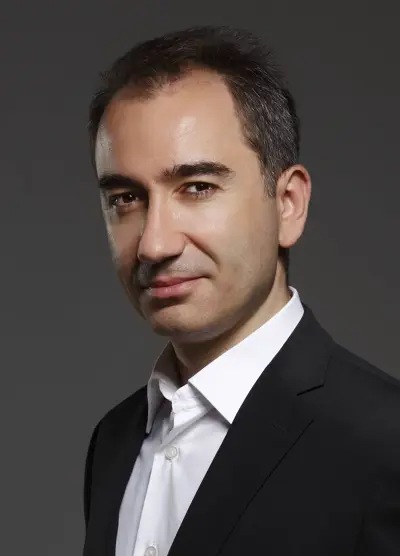
Mustafa Akyol is a Turkish writer and journalist. He is the author of Islam without Extremes: A Muslim Case for Liberty, long-listed in 2012 for the Lionel Gelber Prize, a literary award for the world's best non-fiction book in English. He became a contributing opinion writer for the International New York Times in 2013. He is mainly famous in the western world for his arguments that Islam is highly compatible with classical liberalism and Enlightenment values, and that Islamic practice and the governance of Muslim-majority countries should be reformed along those lines similar to what previously happened in Christian-majority Europe.
