Catherine the Great Quotes
There are no slaves in Russia, only peasants attached to the land.
Catherine II ("The Great"), 1729-1796, Empress of Russia, Reply to Denis Dederot
Sourced by: Eigen's Political and Historical Quotations


America’s first political economist. By his analysis the percentage of death of slaves in the British West Indies was far greater than that of American slavery. By the time England emancipated its slaves there were far fewer than there should have been unless they had been killed off at a very high rate—usually worked to death, poorly fed, unsanitary and unsafe conditions, and little or no medical care.

There was little thought of emancipating slaves or their value to the South by the senior officers of the Union Army at the beginning of the war. The Secretary of War changed that. See {629183}for a typical Union General’s view at the beginning of the war.

He was the Russian Reformer who ended serfdom and gave land to the peasants and then was assassinated. Ironically, both Alexander II and Lincoln were assassinated—because of their reform efforts—Lincoln for going too far; the Czar for not going far enough. See the Nickname that was given to the Czar: {622809}.

In this case, the Pope was obeyed on the issue of slavery. However, Papal injunctions against slavery have not always had the desired effect. See {617632}

In the first article of its first Constitution Vermont banned slavery and indentured servitude. Delaware had previously done it. See {621427}

As an entertainer she had toured much of the world and seen American slavery and that of some other nations. She became a staunch abolitionist and like entertainers in the 20th and 21st centuries she used her celebrity to give anti-slavery lectures and perform for audiences where she donated the proceeds of the event to the abolition cause. She is a particularly interesting political figure in that she seems to be one of the first entertainers to perform for a social cause and become an activist.


The slaves to which he is referring were the serfs of Slovakia who for hundreds of years had literally been the property of the Hungarian nobility. The problem however has been observed about any long-term slavery.

Cities operated on an entirely different plane than the rural countryside which was divided up and given to nobles and the peasants on the land were serfs—virtual slaves to the noble. Cities allowed more equality, opportunity, freedom, modernity, and education. However, serfs would vote with their feet and move into cities leaving the princes devoid of their surf labor. The Emperor tried to stave off this trend by preventing the cities from admitting the surfs who were otherwise generally welcome as they, like immigrants classically provided an excellent source of compliant, low cost labor. Ironically, there are third world countries who even in modern times are trying to restrict the immigration of peasants to the cities.

The “holidays” were a given by most slaveholders for a few days a year. During these times, liquor was usually provided to the slaves and they were encouraged to get drunk end engage in singing, dancing, sports, and social and sexual activities. See {611086} for details about slave holidays and encouraged alcohol use.


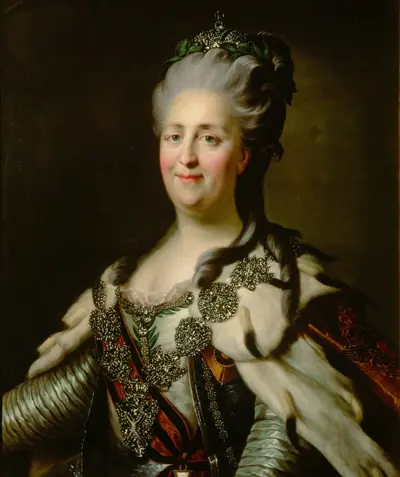
Catherine II, most commonly known as Catherine the Great, was empress regnant of All Russia from 1762 until 1796 – the country's longest-ruling female leader. She came to power following a coup d'état that overthrew her husband and second cousin, Peter III. Under her reign, Russia grew larger, its culture was revitalised, and it was recognized as one of the great powers of Europe.
