Thomas Bulfinch Quotes
The other classes of which society was composed were, first, freemen, owners of small portions of land, independent, though they sometimes voluntarily became the vassals of their more opulent neighbors, whose power was necessary for their protection.
Bulfinch, Thomas. The Age of Chivalry, or Legends of King Arthur. Crosby, Nichols, and Company, 1859, p. 14.


These unfortunate characteristics of Germany at that time, produced the aggressive nation that started two world wars. Looking at Germany a century later, the country has changed radically—especially the three factors described in this quote. Germany has become very much like the rest of Western Europe and America.


The Russian autocrat found it hard to believe that peasants and merchants could have any rights at all as they did in England. He faulted the female ruler, the great Queen Elizabeth I. By modern standards Elizabeth had awesome power and the English People very little, but Elizabeth was relatively restrained in her use of power and paid attention to the effect of affairs of state had on the people." Ivan the Terrible


Cities operated on an entirely different plane than the rural countryside which was divided up and given to nobles and the peasants on the land were serfs—virtual slaves to the noble. Cities allowed more equality, opportunity, freedom, modernity, and education. However, serfs would vote with their feet and move into cities leaving the princes devoid of their surf labor. The Emperor tried to stave off this trend by preventing the cities from admitting the surfs who were otherwise generally welcome as they, like immigrants classically provided an excellent source of compliant, low cost labor. Ironically, there are third world countries who even in modern times are trying to restrict the immigration of peasants to the cities.


A fief was an estate of land and people. The man who had the title to the fief was obligated to raise troops from his estates and lead then at the command of the King. Women, under English law could not inherit a fief—it went to the oldest son. However, once the military element of fiefdom was eliminated, Johnson saw no reason why women should no longer inherit feifs and the titles that went with them.


1st Viscount Bolingbroke. See {627799} for the origin of the bias against merchants and money men. It also represents a rigidity of class structure that characterized England until very recently. The landed gentry were the first class citizens. Usually titles went with the land. In America, someone who would be successful as a merchant or a banker could achieve the highest of social status and political influence. This was not true in England where a merchant that was far more wealthy than a landed lord was not accepted by the aristocracy.

The Diggers were a religious-economic movement that even today would be considered very radical. They advocated the right of the poor to go onto public lands and farm them—thus the name “Diggers.” Beyond their opposition to the private ownership of land to the exclusion of the poor, Winstanley and the Diggers promulgated another very modern doctrine: That the poor should take the responsibility and have the right to determinine how the society should provide for the poor. A version of this became one of the Mottos of the Poverty Program of 1964. See {616966}.

At the time the number of small, independent land owners was diminishing.


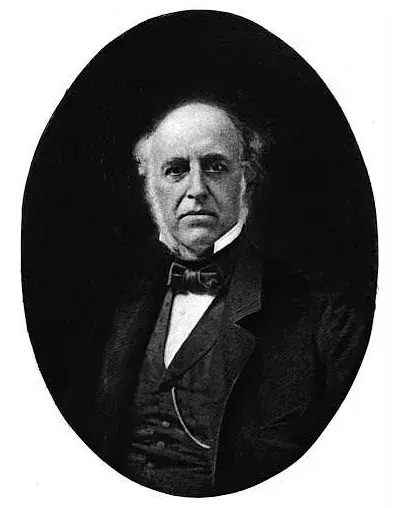
Thomas Bulfinch was an American writer born in Newton, Massachusetts, best known for the book Bulfinch's Mythology.
