James Otis Quotes
There are limits, beyond which, if parliaments go, their acts bind not.
He was considered Massachusetts’ greatest Colonial orator.
James Otis, 1725-1783, Attorney & Member of the Colonial Massachusetts legislature, Oration Against the Stamp Act Delivered Before the Governor and Council In Boston, December 20, 1765
Sourced by: Eigen's Political and Historical Quotations

In the English system the checks and balances of the American system are not present. Historically in England the Monarch and the Parliament acted as checks upon each other. With a Constitutional Monarch there is no institutional check on Parliament. The checks are their restraint--respect for precedent--and the voters. The Prime Minister is a member of Parliament and has no powers other than what Parliament gives him/her. The courts in England are under Parliament and the upper house, the House of Lords is the equivalent of the highest court—but it may always be overruled by the parliament itself.

The Stamp Act had caused much consternation among the colonies. The Continental Congress had gone into session to draft a petition to the King asking that the Act not be enforced. This letter described the chalenge before them. See {589421} for one of the more contentious passages the delegates had to work out.

Though not very dramatic or succinct, this is a very important quotation in American History. The original drafters of the Constitution concentrated on limiting the powers of the executive—the role of the King. But the Congress had no limits placed on them. In Britain, to this day, the Parliament can do whatever they wish as there is no restraint on them other than their prudence and reasonableness. Madison used the example of the Alien and Sedition Acts—huge infringements on the rights of Americans—to show why the legislative branch must also be more restrained and limited. And that was the logic behind adding the Bill of Rights to our Constitutions.


The Governor had warned the Board of Trade about the American reaction to the Stamp Act. He took the position that is was unconstitutional in the sense that it was contrary to Magna Carter. His and other warnings were ignored.

The issues of check and balances in the American constitution were radical by world standards of the day. However, it was by no means an new concept and as this quotation illustrates was discussed and debated in England, but although England was far ahead of almost all other countries with respect to eliminating absolute power, they never took it as far as the Americans did. That took a revolution.

Originally it was published in Boston under the name “A Columbian Patriot.”


The drafters of the Constitution were well aware of this view of Montesquieu’s which was one of the main bases of separation of powers and checks and balances in America.


The issue of impeachment and termination of the executive also found little agreement.

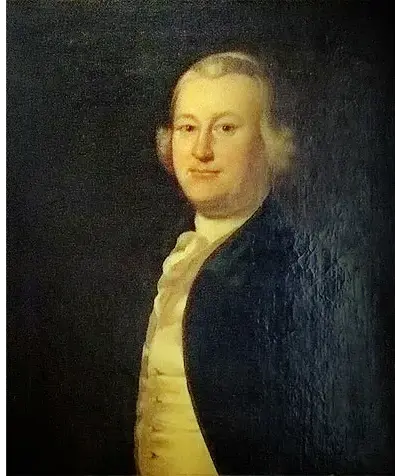
James Otis Jr. was an American lawyer, political activist, pamphleteer, and legislator in Boston, a member of the Massachusetts provincial assembly, and an early advocate of the Patriot views against the policy of Parliament which led to the American Revolution. His well-known catchphrase "Taxation without Representation is tyranny" became the basic Patriot position.
