John Dickinson Quotes
The Executive should be removed at the request of a majority of the State Legislatures
The issue of impeachment and termination of the executive also found little agreement.
John Dickinson, 1732-1808, Member of the Continental Congress, Delaware Delegate to the Constitutional Convention, Debate, Constitutional Convention, Philadelphia, 1787, Quoted in the notes of Georgia Delegate William Leigh Pierce, ~1740-1789
Sourced by: Eigen's Political and Historical Quotations

Seven states was then a majority of the states.

A veto power for the President would be absurd because


Randolph was one of the delegates who opposed a Presidency of a single man.
Mason’s view prevailed. What is interesting is that Mason saw the State as the State Legislature as opposed to the people of the state directly voting for the Senators as we do today.

The Islandic impeachment process requires that the voters make the final decision as to the charges against the President. However, unlike some American “recall” states, the voters may not initiate a plebiscite; it must be initiated by the legislature with a ¾ majority.


If the executive can select the legislators, there is really no separation of powers and the checks are only one way—the executive can check the legislature but not the other way around.


His main reason for believing this is that all appropriations bills must be initiated by the House of Representatives. Lobbyists therefore often give the House more attention than the Senate.


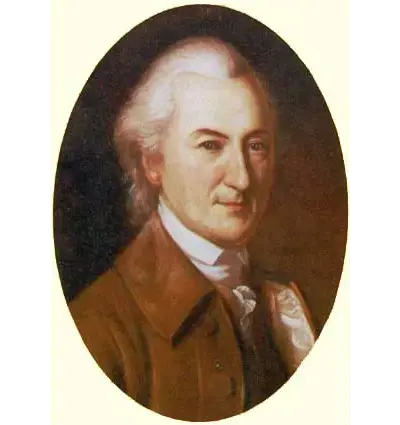
John Dickinson, a Founding Father of the United States, was a solicitor and politician from Philadelphia, Pennsylvania, and Wilmington, Delaware, known as the "Penman of the Revolution" for his twelve Letters from a Farmer in Pennsylvania, published individually in 1767 and 1768. As a member of the First Continental Congress, where he was a signee to the Continental Association, Dickinson drafted most of the 1774 Petition to the King, and then, as a member of the Second Continental Congress, wrote the 1775 Olive Branch Petition. When these two attempts to negotiate with King George III of Great Britain failed, Dickinson reworked Thomas Jefferson's language and wrote the final draft of the 1775 Declaration of the Causes and Necessity of Taking Up Arms. When Congress then decided to seek independence from Great Britain, Dickinson served on the committee that wrote the Model Treaty, and then wrote the first draft of the 1776–1777 Articles of Confederation and Perpetual Union.
