William B. Richardson Quotes
Their [the North Koreans] idea of a concession was not a quid pro quo, like in Western countries. Their idea of a concession was that they're not going to budge, but what they will budge on is they will give you enough time to come to their conclusion, eventually. Time for them is not of the essence.
Richardson was one of a few Westerners who, at the time, had experience negotiating with the North Koreans, and one of the very few who ever got anything from the negotiations.
William B. Richardson, U. S. Ambassador to the United Nations, U. S. Secretary of Energy, U. S. Congressman (Democrat, NM), Governor of New Mexico, Description of North Korean negotiating style, Foreign Policy, March / April, 2015
Sourced by: Eigen's Political and Historical Quotations


The “different character” has local and national variations throughout the Middle East including Arabs and Persians. This affects speeches, public statements, and press releases. To Americans and Europeans it appears to be lying or self-delusion in the speakers part. And when this different character translates to the written word in newspapers or books, it is even more difficult to label and understand.


While it is true that there is a powerful minority of Palestinians and Palestinian organizations—Hamas & Hezbollah, for example whose official position is that there must be no compromise with Israel and Jews must be killed unless they convert to Islam, there are ultra-orthodox, religious, Jewish groups who believe that all the land in dispute was given to the Jews by God and there can be no compromise. The majority of Israelis believe that there is no Palestinian leadership who can stand up to the powerful minorities. The majority of Palestinians believe that the Israeli governments will never stand up to thieir powerful minorities. The Israeli Prime Minister was trying to signal the Palestinians, that if they compromise, the Israelis will also, but neither side has a lot of credibility when it comes to land, borders, and religious identity and that is especially true of this Israeli Prime Minister, who many Israelis (and many Americans) doubt that he will compromise on the land and borders with all the Israeli settlers already inhabiting enclaves of what is, by every law (International, Israeli, and traditional Arab—with the exception of God’s law of the Old Testament—which agrees that the Israelis or the Jewish People do not have title to or control over the lands outside of Israel proper.


This proverb is particularly relevant to the legislative process where coalitions of legislators trade off support for other issues to get support on a current issue. The problem is that someone who will support you only because you offer him something, might also abandon you if the other side offers him more.


This position is a classical example of what some call a “hard line” negotiation stance. It argues that the enemy will never agree to anything that would be reasonable or acceptable to you UNTIL he has given up all hope of getting everything he wants. So this approach says there is no point in even discussing or negotiating anything until the military and economic and diplomatic situation is such that the other side has no hope of winning all it wants. In the case of the Arab Israeli dispute, for 50 years the Arabs believed that they would defeat the Israelis and push them out of the Middle East. For almost 50 years they would not even sit at the same table and negotiate anything. After starting and losing several wars, and falling further and further behind, the moderates began to be reasonable and hinted that they would accept Israel’s right to exist. However, there are some Israelis who argue as Jabotinsky did that there should be no discussions at this time until Hamas and all the terrorist groups have either given up or have been disarmed. This sort of hard line has rarely led to peace—especially if there are hard liners on both sides. They say never negotiate when you are weak. However if you are strong, there is no imperative to negotiate.


The President was spending all day and most of the evening with Japanese and Russian negotiators. He was trying to mediate an end to the Russo-Japanese War. Despite all the difficulties, Roosevelt found a new skill of personal international diplomacy. The war seemed intractable, but Roosevelt was able to get a peace treaty signed for which he was awarded the Nobel Peace Prize. It is doubtful that any modern president could spend so much concentrated time on an issue that was really not in the national interest of the United States. However, Roosevelt’s time and effort investment paid off in that by settling that dispute and getting nothing out of it for America or American business, the United States was in world opinion, elevated to a new status of fair, impartial and non-selfish international activity—a model that despite some lapses in later years, the United States has been unique.


The issue being debated was slavery and Calhoun was one of the major defenders of it. His admonition against compromise represents one of two general major approaches to negotiations. The first is to compromise and finally reach a consensus and this is the means by which almost every piece of major legislation in American history has been created. The second is that stated in this quotation, and it was followed by most advocates of slavery. Since compromise was not possible, civil war eventually settled the issue.


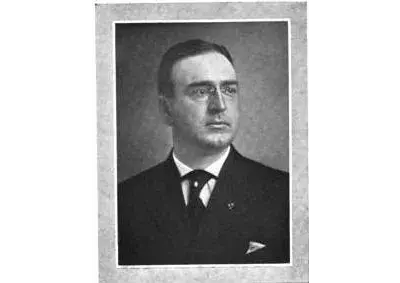
For other persons named William or Bill Richardson see William Richardson (disambiguation).
