John C. Calhoun Quotes
I hold concession or compromise to be fatal. If we concede an inch, concession would follow concession — compromise would follow compromise, until our ranks would be so broken that effectual resistance would be impossible. We must meet the enemy on the frontier, with a fixed determination of maintaining our position at every hazard.
The issue being debated was slavery and Calhoun was one of the major defenders of it. His admonition against compromise represents one of two general major approaches to negotiations. The first is to compromise and finally reach a consensus and this is the means by which almost every piece of major legislation in American history has been created. The second is that stated in this quotation, and it was followed by most advocates of slavery. Since compromise was not possible, civil war eventually settled the issue.
John C. Calhoun, 1782-1850, Vice President of the United States (Democrat, SC), U. S. Congressman & Senator (Democrat, SC), Senate Speech, February 6, 1837
Sourced by: Eigen's Political and Historical Quotations


Ibarruri is thought to have originated this slogan, in the context of the Spanish Civil War, during a radio speech to Madrid in 1936 when he declared, “Fascism will not pass, the executioners of October will not pass.” For use in a different context see Petain {46976}


Refusing to negotiate with terrorist kidnappers of Americans:

He escaped and inspired a revolution that ousted his persecutor.


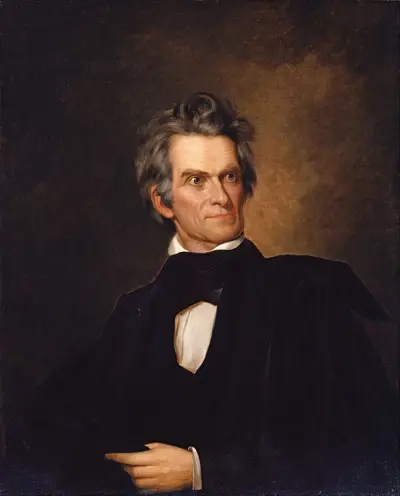
John Caldwell Calhoun was an American politician and political theorist from South Carolina who held many important positions including being the seventh vice president of the United States from 1825 to 1832, while adamantly defending slavery and protecting the interests of the white South when its residents were outnumbered by Northerners. He began his political career as a nationalist, modernizer, and proponent of a strong national government and protective tariffs. In the late 1820s, his views changed radically, and he became a leading proponent of states' rights, limited government, nullification, and opposition to high tariffs. He saw Northern acceptance of those policies as a condition of the South remaining in the Union. His beliefs and warnings heavily influenced the South's secession from the Union in 1860–1861.
