G.D.H. Cole Quotes
The whole people would no more be able than the whole body of shareholders in a great enterprise to manage an industry....It would be necessary, under socialism as much as under large scale capitalism, to entrust the actual management of industrial enterprise to salaried experts, chosen for their specialized knowledge and ability in particular branches of work....There is no reason to suppose that the methods of appointing the actual managers in socialized industries would differ widely from those already in force in large scale capitalist enterprise....There is no reason to suppose that the socialization of any industry would mean a great change in its managerial personnel.
G.D.H. Cole, 1889–1959, English Economist & Writer, President of the Fabian Society
Sourced by: Eigen's Political and Historical Quotations


The concept and importance of the manager was just beginning to be understood. Sumner was instrumental in making workers and capitalists that they all needed and depended on managers who he called “captains of industry.” Others used the term to describe rich financiers and owners of large enterprises, but Sumner identified a role for the captain who was neither an owner nor a worker—the modern executive.

Coolidge was extremely pro business. See {598686}.


Lev Davidovich Bronstein. Before the Russian Revolution large factories did not have to be very efficient as the labor was paid so little. After the Revolution, the workers were paid more and the inefficient procedures became even more disorganized with the workers in control for the first time without any management experience. At the same time, the small privately owned manufacturing businesses were making a profit with no help from the government. This was an embarrassment that the Communists eventually solved by shutting down the private businesses that were such an embarrassment. Russian manufacturing was never world class and efficient under the Soviets even after the post Revolution crises.


There is a very interesting parallel with the views and statements of FDR at the same time.

At the Seventh World Congress of the Comintern in 1935 the new Popular Front policy was announced. To communist hard-liners and to the far left, the policy was an abandonment of the Marxist revolutionary line.


Statements like this caused some to believe him a Marxist, but see his quotation on Karl Marx -- {603061}.

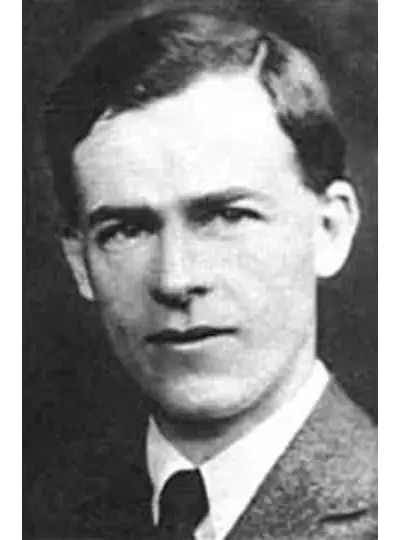
George Douglas Howard Cole was an English political theorist, economist, and historian. As a libertarian socialist, he theorised guild socialism. He belonged to the Fabian Society and was an advocate for the co-operative movement.
