William Graham Sumner Quotes
One of the worst features of the existing system is that the employees have a constant risk in their employer. If he is not competent to manage the business with success, they suffer with him. Capital also is dependent on the skill of the captain of industry for the certainty and magnitude of its profits. Under these circumstances there has been a great demand for men having the requisite ability for this function. As the organization has advanced, with more impersonal bonds of coherence and wider scope of operations, the value of this functionary has rapidly increased. The possession of the requisite ability is a natural monopoly. Consequently, all the conditions have concurred to give to those who possessed this monopoly excessive and constantly advancing rates of remuneration.
The concept and importance of the manager was just beginning to be understood. Sumner was instrumental in making workers and capitalists that they all needed and depended on managers who he called “captains of industry.” Others used the term to describe rich financiers and owners of large enterprises, but Sumner identified a role for the captain who was neither an owner nor a worker—the modern executive.
William Graham Sumner, 1840-1910, Political Scientist & Philosopher, The absurd effort to make the world over, March 1894
Sourced by: Eigen's Political and Historical Quotations


That has been the average perception well into the 21st century.


The huge salaries paid to CEO’s in the early 21st century became a major political issue during the George W. Bush administration in the wake of the Corporate scandals like Enron and the failure of the Government to prevent these frauds. The tax deductibility of the huge salaries also attracted political attention at a time when Bush policies had created the largest deficits in the history of the world.

Like politicians, business CEOs almost always blame others lower down in the chain for their errors. (Politicians usually blame someone from the opposition of the opposition as a group.)

Corporations were not common at the time. The corporations of the day like large corporations today had directors and managers who were not the principle owners. There was deep suspicion that these professional managers would not watch over the money of the corporation with the same degree of vigilance as would the owner manager. The same problem exists today when the economic vested interest of the managers and the shareholders do not always coincide. Various bonus schemes have been created to ameliorate the problem, but as the meltdown of 2008 and the Great Recession demonstrated, many managers would make ruinous decisions for the corporation as they could get large bonuses. “Copartnery” is an older English term for “partnership.”

The two politicians were amazed as they learned more and more about some of industrial leaders of the country. This is the language they used in private communications.

This belief held by Ford and most other American auto executives, left the small car market open for the Japanese and the Europeans. This was one of the poor decision that caused the American auto companies to almost go under in 2008 and the Government bailed them out and forced them all to make smaller cars which use less gasoline or use electricity. Then then thrived and paid back bailout funds early. Ford and the others made decisions that almost destroyed the American automobile industry.

In the 19th century, most socialists thought that the government was the major creator of jobs. In the 20th century, most socialists acknowledged that jobs could emanate from both the public and private sectors. Here in the 21st century, one of the world’s leading socialists, stated that private companies were necessary for full employment.

High level financial industry executives were earnings millions of dollars even if the company did poorly. In many cases annual bonuses were paid even after the firm lost money and in some cases after the firm had to be sold to stave off bankruptcy. The worst thing in 2009 and 2010 was when some of the banks paid million dollar and more bonuses while the company was getting bailout money from the taxpayers to prevent their bankruptcy.

Martin had this facinating idea of balancing capitalism and communism in American Society. All youth would be in national service to the state for 8 years during that time why will be assigned by the state to producing and providing the necessary goods and services for evryone else. And these would be goven to all as an entitlement. (She had calculated that is what it took to produce the "necessities") All adults after their national service were entitled to the necessities for life whether or not the worked. However all luxuries would be unter captialistic control. People who anted to make and sell them could do so and could earn money from doing so either as entrepraneurs, investors, employees. So all who wished luixuries would have to earn them in a classic captialsitic system, but the social safety net of the necessities would be free to all.


This Republican mantra has been central for the Republicans for the entire century after Theodore Roosevelt who thought that business had to be regulated and controlled. The same basic speech has been given by conservative Republicans ever since.
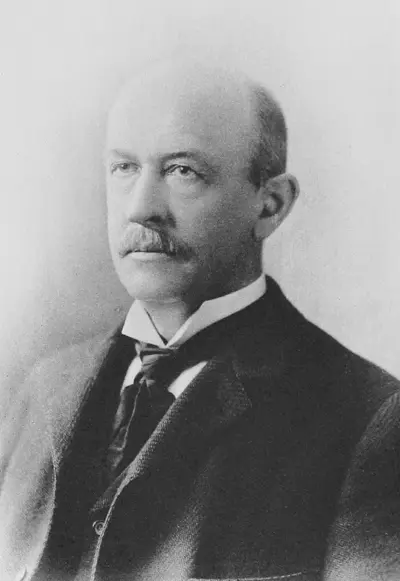
William Graham Sumner was a classical liberal American social scientist. He taught social sciences at Yale, where he held the nation's first professorship in sociology. He was one of the most influential teachers at Yale or any other major school. Sumner wrote widely within the social sciences, with numerous books and essays on American history, economic history, political theory, sociology, and anthropology. He supported laissez-faire economics, free markets, and the gold standard. He adopted the term "ethnocentrism" to identify the roots of imperialism, which he strongly opposed, and as a spokesman against it he was in favor of the "forgotten man" of the middle class, a term he coined. He had a long-term influence on conservatism in the United States.
