C. S. Lewis Quotes
I live in the Managerial Age, in a world of "Admin." The greatest evil is not now done in those sordid "dens of crime" that Dickens loved to paint. It is not done even in concentration camps and labour camps. In those we see its final result. But it is conceived and ordered (moved, seconded, carried, and minuted) in clean, carpeted, warmed, and well-lighted offices, by quiet men with white collars and cut fingernails and smooth-shaven cheeks who do not need to raise their voice. Hence, naturally enough, my symbol for Hell is something like the bureaucracy of a police state or the offices of a thoroughly nasty business concern.
C. S. Lewis, 1898-1963, Carl Staples Lewis, English Author, Preface, The Screwtape Letters, 1942
Sourced by: Eigen's Political and Historical Quotations


Many people think that running a corporation is good training and demonstrates the ability to run the country. However, business leaders who have come into government, almost all like Breton, think the two are very different.


3rd Earl Russell of Kingston


Lev Davidovich Bronstein


The service institutions to which he was referring are government and non-profit service intuitions.

This comedic example of bureaucratic double talk actually has a parallel in reality. See the Secretary of Defense on one of his tour de force statements: see linked quote(s).

The concept and importance of the manager was just beginning to be understood. Sumner was instrumental in making workers and capitalists that they all needed and depended on managers who he called “captains of industry.” Others used the term to describe rich financiers and owners of large enterprises, but Sumner identified a role for the captain who was neither an owner nor a worker—the modern executive.


Manava Dharma Shastra. Fundraisers, have even in ancient Hindu India, have long been appointed to key government posts. This text is a part of the Hindu Holy Texts. Hindus believe that Manu was a prophet whose text is revealed or inspired.

In 1875 Benjamin Disraeli had an opportunity to purchase the Suez Canal for Great Britain from the Khedive of Egypt who was in great need of cash. However, Disraeli had to act very fast and there was no way to quickly move an appropriation of the then very large sum of 4 million pounds through Parliament. So he sent Corry to ask Lionel Rothchild, the British financier, for a loan until the government might raise the money. Rothchild asked, what would be the security for such a large loan. Rothchild immediately gave the loan.

1st Earl of Beaconsfield


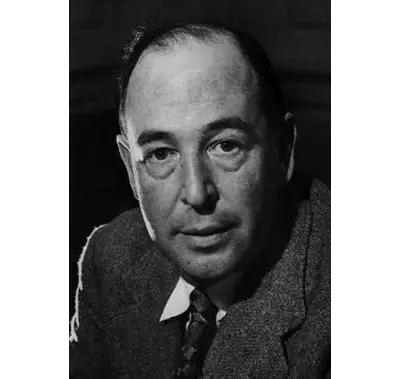
Clive Staples Lewis was a British writer and lay theologian. He held academic positions in English literature at both Oxford University (Magdalen College, 1925–1954) and Cambridge University (Magdalene College, 1954–1963). He is best known for his works of fiction, especially The Screwtape Letters, The Chronicles of Narnia, and The Space Trilogy, and for his non-fiction Christian apologetics, such as Mere Christianity, Miracles, and The Problem of Pain.
