Manu Quotes
He [the king] must also appoint other officials, men of integrity, who are wise, firm, well able to collect money, and well tried.
Manava Dharma Shastra. Fundraisers, have even in ancient Hindu India, have long been appointed to key government posts. This text is a part of the Hindu Holy Texts. Hindus believe that Manu was a prophet whose text is revealed or inspired.
Manu, ~ 500 BC, Hindu Teacher from India, Laws of Manu
Sourced by: Eigen's Political and Historical Quotations


The English considered the new American diplomats very difficult to deal with and felt that gentlemanly English diplomats were ill suited to the task. He recommended:


Manava Dharma Shastra. This text is a part of the Hindu Holy Texts. Hindus believe that Manu was a prophet whose text is revealed or inspired.
Manava Dharma Shastra. This text is a part of the Hindu Holy Texts. Hindus believe that Manu was a prophet whose text is revealed or inspired.

In 1875 Benjamin Disraeli had an opportunity to purchase the Suez Canal for Great Britain from the Khedive of Egypt who was in great need of cash. However, Disraeli had to act very fast and there was no way to quickly move an appropriation of the then very large sum of 4 million pounds through Parliament. So he sent Corry to ask Lionel Rothchild, the British financier, for a loan until the government might raise the money. Rothchild asked, what would be the security for such a large loan. Rothchild immediately gave the loan.


Jefferson claimed that a President should only ask three questions about a potential appointee.

MacArthur was astounded that the country turned to Eisenhower rather than him. He actually did not think much of Eisenhower. Eisenhower, was very critical of MacArthur. See

Before Governor Mecham was impeached, Senator John McCain called for his resignation. After Mecham was impeached for misusing State funds and thwarting investigations of death threats, he commented upon McCain's qualifications for a place on the Republican national ticket:

China, after overthrowing the Manchu Dynasty was struggling among many factions for control of the government. Many of the potential leaders were corrupt.


Whitman himself had worked as a clerk in 3 different Federal Departments.

3rd Earl Russell of Kingston

This is an amazing speech which illustrated the best of the development and growth of Islam. Note that: The ruler who has just been given ALL secular AND religious power admits candidly that he may not be the best qualified. This would not happen for over another 1000 years and even today is very rare in any society. In addition, he invites the citizens to correct him when he is wrong. Later, Calihs would, like the Christian kings and popes claim infallibiity and kill any who suggested otherwise. And daring to correct the ruler was capital offence for most of history and is even dangerous in some Muslim countries today. Last and perhaps most amazing, the new Caliph called for an affirmative leveling of the inequality of rights and power and announces it asa one of his major responsiblities. It is this kind of vision so unheard of at the time which shows us why so many flocked to Islam at the time. From a fairness, human rights, and accoutabiity of the ruler point of view Islam was the most modern of the religions then. Tragically, other forces shaped Islam for the next 1500 years and most Muslim countries become the least modern and its rulers are least accountable to the citizenry with none of the other rights and concept of fairness that Abu Bakr and other early Islamic leaders brought.
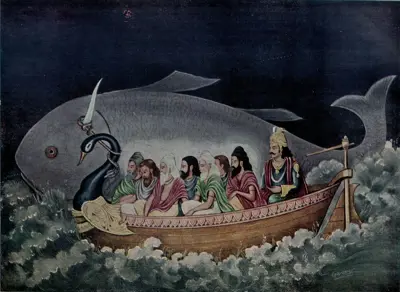
Manu (Sanskrit: मनु) is a term found with various meanings in Hinduism. In early texts, it refers to the archetypal man, or to the first man (progenitor of humanity). The Sanskrit term for 'human', मानव (IAST: mānava) means 'of Manu' or 'children of Manu'. In later texts, Manu is the title or name of fourteen mystical Kshatriya rulers of earth, or alternatively as the head of mythical dynasties that begin with each cyclic kalpa (aeon) when the universe is born anew. The title of the text Manusmriti uses this term as a prefix, but refers to the first Manu – Svayambhuva, the spiritual son of Brahma.
