Walt Whitman Quotes
I found the clerks mainly earnest, mainly honest, anxious to do the right thing — very hard working, very attentive. I do not refer to swell officials — the men who wear the decorations, get the fat salaries. I refer to the average clerks, the obscure crowd, who after all run the government: they are on the square.
Whitman himself had worked as a clerk in 3 different Federal Departments.
Walt Whitman, 1819-1902, Poet & Journalist, Statement to biographer Horace Traubel
Sourced by: Eigen's Political and Historical Quotations


The Arab Culture has traditionally been one of poetic oratory with much exaggeration. The last of the three statements above was his attempt to limit this tendency when facts were needed. This is one of his desires that was short-lived and is a huge problem in modern Arab administration of most things.


He was executed for rebellion at age 29. However, a number of his followers went on to leadership positions in the reforms that followed.


We shall have a system where When Roosevelt became Police Commissioner, virtually every appointment, promotion, and disciplinary action was controlled politically. Nothing could be more shocking to the police and the politicians than Roosevelt’s statement. But he implemented that policy and the result developed into the finest urban police department in the country. The political influence however returned a few decades later.


_0_PostageStamp_47x47.jpg "Chairman of the Joint Chiefs of Staff Navy Adm. Mike Mullen gives an interview to John Dickerson during the CBS news program Face the Nation in Washington, D.C., July 5, 2009. During the interview, Mullen discussed the wars in Iraq and Afghanistan, North Korea's recent missile tests and his recent visit to Russia. (DoD photo by Mass Communication Specialist 1st Class Chad J. McNeeley, U.S. Navy/Released)")

“Public charities” were government services that were like those provided by private charities: relief, food, housing etc. ie “welfare”


He was describing his first government experience as a a civil servant of the Department of Agriculture in the New Deal. The political party affiliation is not so critical today for most civil service posts but there are about 10,000 positions where party affiliation is very critical.
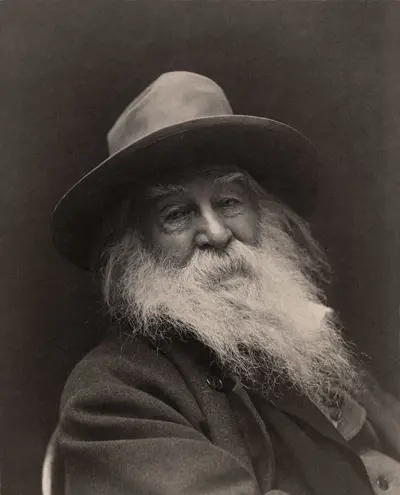
Walter Whitman was an American poet, essayist, and journalist. A humanist, he was a part of the transition between transcendentalism and realism, incorporating both views in his works. Whitman is among the most influential poets in the American canon, often called the father of free verse. His work was controversial in its time, particularly his poetry collection Leaves of Grass, which was described as obscene for its overt sensuality. Whitman's own life came under scrutiny for his presumed homosexuality.
