William Graham Sumner Quotes
Nine-tenths of the socialistic and semi-socialistic, and sentimental or ethical, suggestions by which we are overwhelmed come from failure to understand the phenomena of the industrial organization and its expansion. It controls us all because we are all in it. It creates the conditions of our existence, sets the limits of our social activity, regulates the bonds of our social relations, determines our conceptions of good and evil, suggests our life-philosophy, molds our inherited political institutions, and reforms the oldest and toughest customs…
William Graham Sumner, 1840-1910, Political Scientist & Philosopher, The absurd effort to make the world over, March 1894
Sourced by: Eigen's Political and Historical Quotations


This is an incredibly prescient quotation. Dewey saw globalization starting before most realized the change. He wrote this in 1916. Almost a century later, we live with the results of the process that he described.


Over a century ago writers were beginning to see the downside of a global economy. They had not however seen the enormous benefits against which the cost must be weighed.


Luddism was a British anti-technology movement whereby the Luddites sabotaged and destroyed manufacturing machinery.


Over the years, despite many efforts to unify workers of the world, most were much more focused on their own country. In this sense, Mussolini who was so wrong about most political things, may have been right in this instance.


In China, the religious activities of the Missionaries never really lead to the many troubles between the missionaries and the Chinese. It was their activities in the non-religious arenas articulated here by Denby.


Opposition to the Bolsheviks


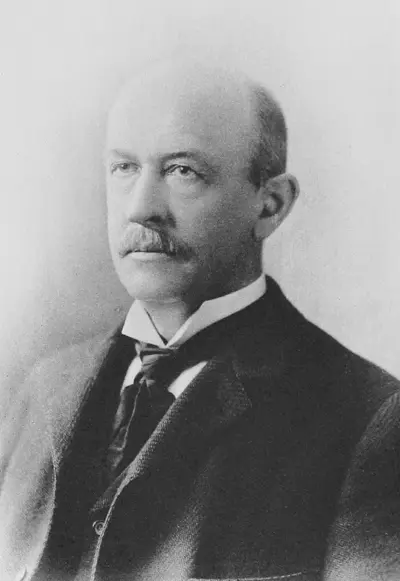
William Graham Sumner was a classical liberal American social scientist. He taught social sciences at Yale, where he held the nation's first professorship in sociology. He was one of the most influential teachers at Yale or any other major school. Sumner wrote widely within the social sciences, with numerous books and essays on American history, economic history, political theory, sociology, and anthropology. He supported laissez-faire economics, free markets, and the gold standard. He adopted the term "ethnocentrism" to identify the roots of imperialism, which he strongly opposed, and as a spokesman against it he was in favor of the "forgotten man" of the middle class, a term he coined. He had a long-term influence on conservatism in the United States.
