Friedrich Engels Quotes
Modern industry and the opening of the world market made the struggle universal and at the same time gave it unheard-of virulence. Advantages in natural or artificial conditions of production now decide the existence or non-existence of individual capitalists as well as of whole industries and countries. He that falls is remorselessly cast aside.
Over a century ago writers were beginning to see the downside of a global economy. They had not however seen the enormous benefits against which the cost must be weighed.
Friedrich Engels, 1820-1895, German Socialist & Revolutionary Theorist, Anti-Duehring
Sourced by: Eigen's Political and Historical Quotations

Executed by the English for his part in the Easter Uprising. Although a century ago, Connolly captured the centrality of the development problem of every Third World County trying to compete in a global economy. The irony is that Ireland, long after achieving Independence, had the lowest standard of living in Europe for years. The great Irish breakthrough came as the result of the government making a huge national investment providing the capital for giving all of Ireland access to the Internet and passed laws for the information age. The Irish people took it from there. They leapfrogged wealthier nations and found customers all over the globe because they had the infrastructure to reach the rest of the globe just as fast as anyone else. See {589760} for Connolly’s idea to bring technology of the time to Ireland. The Irish information revolution was accomplished by using this idea for information technology instead of farm technology.


Most defenders of the Capitalist system that produces large inequities argue that interfering in the free market wouldl be worse. However this thesis argues that the inequality is actually good for the people including those at the low end of the ladder.


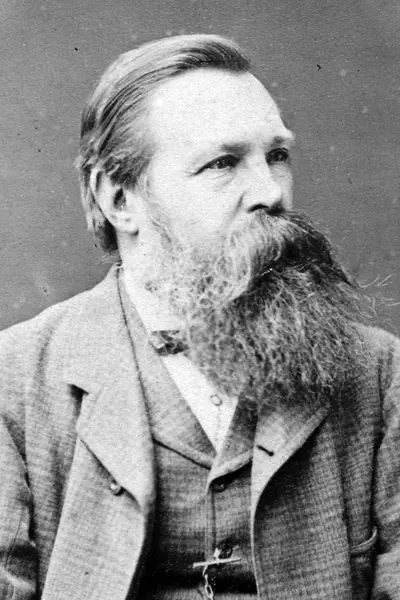
Friedrich Engels (/ˈɛŋ(ɡ)əlz/ ENG-(g)əlz, German: [ˈfʁiːdʁɪç ˈʔɛŋl̩s]), sometimes anglicised as Frederick Engels, was a German philosopher, economist, historian, political theorist and revolutionary socialist. He was also a businessman, journalist and political activist, whose father was an owner of large textile factories in Salford (Lancashire, England) and Barmen, Prussia (now Wuppertal, Germany).
