Antonio Labriola Quotes
The machines, which mark the triumph of science, become, by reason of the antithetic conditions of the social plexus, instruments which impoverish millions and millions of artisans and free peasants.
Antonio Labriola, 1843-1904, Italian Historian & Philosopher, Essays on the Materialist Conception of History, 1896
Sourced by: Eigen's Political and Historical Quotations


Jefferson was one of the first political and economic thinkers to express concern over the “wage slave” concept of the industrial revolution. This was one of the major reasons that he was not in consonance with Alexander Hamilton in his economic vision for America. While we followed the Hamilton direction, there are still issues of maintaining freedom and independence for an employee in modern nations and economies.


This fascinating quotation is very frequently quoted out of context. For example even in modern times some Southern slavery apologists quote this passage stating that Adams saw no moral difference between slavery and employment of the lower classes. And anti-capitalists have claimed that this was an attack on capitalism as no better than slavery for many workers. Neither is true. The debate was on the head taxes that states should pay to the central government. Southerners were claiming that they should not have to pay per person taxes on slaves. Adams position was that they should pay in that there is no practical difference in the work and working conditions very often. If slaves should be exempted from the head tax, so should the poor, lower class workers like the fisherman in New England. He always maintained at huge moral difference between a poor free worker and a slave even thought their working conditions might be similar.


Over a century ago writers were beginning to see the downside of a global economy. They had not however seen the enormous benefits against which the cost must be weighed.


Salisbury was a brilliant, effective prime minister, but he was a snob and not a democrat. See {639131}.

One steam engine, pulling a large plow by cables and manned by 5 or 6 workers could do the work of 20 horse drawn plows each requiring 1 worker. In addition all the workers who were needed to maintain the horses and clean up after them were also no longer required.

The major problem at the time was not the capitalist in the industrial revolutionary sense of the word as there was little industry. China as an agrarian society but the vast majority of the land was owned by relatively few wealthy families. It was close to a feudal system and that was the target for the Communists and their revolution. There was a very small proletariat. Their methods were brutal, but they executed the landlords and the class warfare ended quickly. Sun Yat-sen was not able to solve the land problem, nor was Chiang Kai-shek as most of his major supporters were landowners of warlords who controlled the landowners.

In his economic view, managers, accountants, attorneys, owners, shareholders, landlords, were all supported by the workers who have to support themselves and all the others.


The left has always been ambivalent about automation. Many object to it on the grounds that it puts men out of work. However, others such as Lafage, argued that automation was the only economic way to reform the working hours and conditions of labor. The problem at the time was that as long as labor was so cheap, there was no motivation for the manufacturer to invest in better machinery. He and many others argued that minimum wages and their increases increase productivity because it would force manufacturers to invest in more productive equipment to reduce their labor costs.

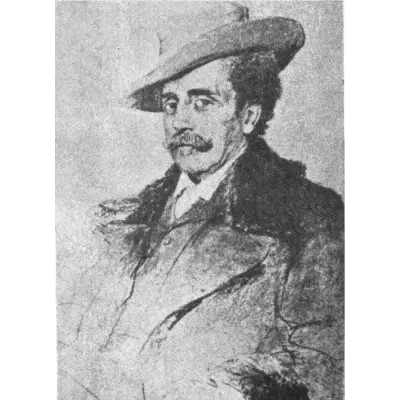
Antonio Labriola was an Italian Marxist theoretician and philosopher. Although an academic philosopher and never an active member of any Marxist political party, his thought exerted influence on many political theorists in Italy during the early 20th century, including the founder of the Italian Liberal Party, Benedetto Croce and the leaders of the Italian Communist Party, Antonio Gramsci and Amadeo Bordiga. He also influenced Bolshevik and Left Oppositionist Leon Trotsky.
