William Whitelaw Quotes
The whitewashing of windows can provide very effective protection against fire resulting from the heat-flash from nuclear explosions.
Leaders of the nuclear powers were uttering nonsense like this to keep public fear of nuclear war to a minimum. See {618658} and {618657}.
William Whitelaw, 1918-1999 British Home Secretary & Leader of the House of Lords (Conservative), Minister for Northern Ireland, 1980
Sourced by: Eigen's Political and Historical Quotations

It was part of the Duck and Cover campaign where school children were taught that in an a nuclear attack they should duck under their school desks and cover their heads with their hands. For other examples of simplistic defense methods that would calm the population see {636091} and England: Whitelaw {614440} and {618657}.

Canada had the same absurd civil defense propaganda in the Cold War as the U. S. did. Both governments wanted to persuade their publics that a nuclear attack was survivable.

He was the first man to see the experimental evidence of nuclear power and he realized that it had the potential for an incredibly powerful weapon. It was his message about the possibilities about the atomic bomb that Albert Einstein transmitted to FDR, leading to American development of the bomb.(See {624449}.) By the time the atomic bomb had been developed, Germany had surrendered and Szilard and others felt that there was no longer a need to beat the Germans to the development. So he went from the biggest enthusiast to the most serious opponent.

What makes this quote important historically is to realize the assurances that he had to give the press and the public. This shows the level of anxiety about nuclear science that existed at the time and some of the absurd claims that critics and skeptics made. While it was true that there were same dangers in the nuclear testing, some of which the authorities were ignorant of, they were not of the expansive catastrophic magnitude that the critics claimed. Almost all new science and technology develops a Luddite community of opponents who want the technology stopped or at least slowed much. These opponents almost always exaggerate dangers in order to alarm public opinion via fear. At the same time, almost all the new scientific arenas eventually display and disclose problems and potential dangers of which the scientists and policy makers originally unaware. But they are almost always different from those the original critics claim. For example instead of environmental concern for radiation caused mutations in the animal life or the problem of what to do with radioactive byproducts of making atomic weapons, the warnings were that the water would flow out of the oceans and that gravity would be nullified.


The enriched nuclear fuel could be used to operationalize a nuclear bomb. Iran had a history of using illegal poison gas in the Iraq-Iran War (Both sides used chemical weapons.) Iran had a history of aiding terrorist organizations. And Iran is the only nation belonging to the UN and sighing its charter in modern history that has threatened to destroy another nation via their President whose threats had not been retracted. Iran also is a Shiite Muslim nation and is at odds with the Sunni Muslim countries of the Middle East and if the Iraqis developed a nuclear bomb, there would be a Middle Eastern nuclear arms race. If Iraq would not cease its development program under pressure from other nations, a military attack was the other option. All were indeed ugly.


The Iranian President has said publicly that Iran would wipe Israel off the face of the map. Iranian politicians and the public constantly clamor for death to Israelis and for that matter all Jews. Although not all Iranian politicians agree with the desirability or morality of such a policy, the nation was openly trying to enrich uranium and plutonium which are the key ingredients to atomic weapons. Israel is within missile range of Iran and sees Iran as an existential threat which justifies preemption as they did to stop Syrian and Iraqi nuclear development.

Stalin used this phrase during the period when the U. S. had nuclear weapons and the Soviet Union did not. Stalin had his scientists working frantically to catch up but in the interim he outwardly displayed a bravado diminishing the military importance of nuclear weapons and minimizing the disadvantage that the Russians were at.

See {633890} regarding the nuclear accidents at that time.


The Scientific Project that developed the Atomic Bomb
The Booklet told people that even under an atomic attack there would be many survivors and it was everyone’s job to increase the number of survivors by taking precautions like building fallout shelters and maintaining a supply of food and water at home and ducking under desks and tables if there was an atomic attack. The implication was that despite the great firepower of the then Hydrogen Bombs there would be great survivability. The suggestions for protection ranged from minimal likely effect to absurd. The Publication also bore the imprimatur of the Executive Office of the President for credibility and many people believed it.


One new danger that nuclear powers add to the usual problems of conflict, is that a nuclear power, about to lose a war in a humiliating way, might just use his nuclear weapons in revenge. So much damage will be done that the victory turned out to have been a bad thing. So ironically, with a nuclear enemy. Your military dare not win to dominantly with conventional weapons.


The other two members of the committee, at the height of the red scare and the cold war, voted to remove the security clearance and hence fire the brilliant scientist who had done the most to develop the atomic bomb, but had concerns about building the “Super” bomb—the hydrogen bomb. A dissenter was thus eliminated.
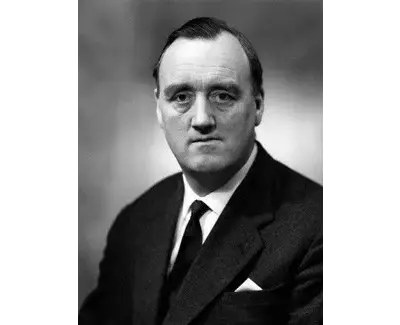
- Born: June 28, 1918
- Died: July 1, 1999
- Nationality: British
- Profession: Politician
William Stephen Ian Whitelaw, 1st Viscount Whitelaw, KT, CH, MC, PC, DL, often known as Willie Whitelaw, was a British Conservative politician who served in a wide number of Cabinet positions, most notably as home secretary. He served Prime Minister Margaret Thatcher throughout her leadership of the Conservative Party as deputy party leader.
