Frederick the Great Quotes
The violation of a treaty is often the only means whereby complete ruin can be avoided.
Frederick II, 1712-1786, [The Great], King of Prussia, Memoirs
Sourced by: Eigen's Political and Historical Quotations


Treaties often end up with disputes of the parties over issues in the treaty. Good treaties have built in a method for resolving differences regarding the treaty. This clause is a good example.

Although Great Britain had abolished slavery, British economic interests during the Civil War suffered because of the northern blockade of the South. Much political opinion in England was hostile to the blockade policies of the Union. Bright, a great admirer and supporter of the United Sates and the Union cause was concerned that the United States might drift into War with Great Britain. His letter to Senator Sumner was written with the understanding that it would be in shared with President Lincoln, and it was actually read at a cabinet meeting.


The report was from Heinrich von Tschirschky, the German ambassador to Austria-Hungary. He recommended that Germany persuade Austria-Hungary to not attack Serbia, not realizing the German leaders had already planned a war with Russia and saw the issues between the Austro-Hungarian Empire and Serbia was a good excuse to implement their war plans (see {642092}).


Response when German Troops were occupying a part of China. See {641706}.


Laws that do not work can be repealed by Congress with the President’s signature. However, if there is an international treaty, the United States may NOT change the laws to fix something that does not work. At best, the administration can try to re-negotiate the treaty, but has no power to assure the change unless, it withdraws from the treaty. However, most treaties are very complex and involve many elements and there is no way to withdraw from a single aspect of a treaty, even if it is a bad aspect.


With promises the success lies in following through and keeping the promise which is usually very costly. A threat that fails meanwhile can be the most expensive thing. We make a threat to deter a foreign power from something. Failure occurs when they are not intimidated and go ahead anyway. Then if we follow through on the threat, that is very costly—a war, a trade embargo, or whatever. Not following through on the threat is the costliest of all as we lose our credibility, trust and honor.

These have actually evolved in a number of areas such as GATT and other trade areas.
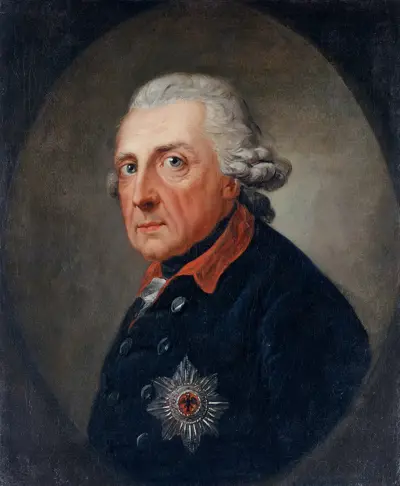
Frederick II was a Prussian king and military leader who ruled the Kingdom of Prussia from 1740 until 1786, reigning longer than any other Hohenzollern king. His most significant accomplishments during his reign included his reorganization of Prussian armies, his military successes in the Silesian wars and the Partitions of Poland, and his patronage of the arts and the Enlightenment. Frederick was the last Hohenzollern monarch titled King in Prussia and declared himself King of Prussia after annexing strategic parts of the Polish–Lithuanian Commonwealth in 1772. Prussia greatly increased its territories and became a leading military power in Europe under his rule. He became known as Frederick the Great (German: Friedrich der Große) and was nicknamed "The Old Fritz" (German: "Der Alte Fritz") by the Prussian people and eventually the rest of Germany.
