William Smyth Quotes
It is impossible for either nations or individuals, in the management of a dispute, to have the benefit of two opposite chances. They may be, from the first, moderate, pacific, magnanimous; they will thus secure certain advantages, and they will lose possible advantages. They may, on the contrary, be haughty, warlike, and selfish ; their chances and advantages will then be the reverse of the former. It is impossible to unite the two.
William Smyth, 1765–1849, English Historian, Lectures on Modern History, published 1854
Sourced by: Eigen's Political and Historical Quotations


Attila the Hun. They were discussing a structure for negotiating Attila’s grievance against Rome.


Israel had again been attacked by Arab armies and at the same time the parties were in peace negotiations. Some argued that there should be a cease fire while negotiations were ongoing, but Rabin explained that if the two did not go on simultaneously and independently, neither might go well.


While this was a common attitude for years before, the horrors of World War II produced a general revulsion to war and an awareness that war between two nations spills over to other states in the region and in an era of globalization, effects countries in other parts of the world. So there has been a tendency to use diplomacy endlessly, even after "things have gone too far". Historically, when things reached that point, the parties did fight it out, and when one was weakened sufficiently, negotiations and diplomacy could then be fruitful.

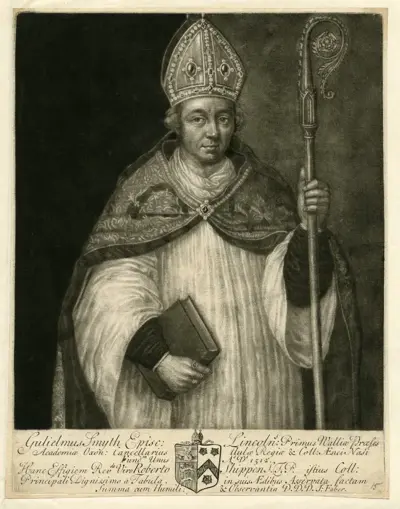
William Smyth (or Smith) was Bishop of Coventry and Lichfield from 1493 to 1496 and then Bishop of Lincoln until his death. He held political offices, the most important being Lord President of the Council of Wales and the Marches. He became very wealthy and was a benefactor of a number of institutions. He was a co-founder of Brasenose College, Oxford and endowed a grammar school in the village of his birth in Lancashire.
