Edward Gibbon Quotes
The urgent consideration of the public safety may undoubtedly authorize the violation of every positive law.
Edward Gibbon, 1737-1794, English Historian, Decline and Fall of the Roman Empire
Sourced by: Eigen's Political and Historical Quotations

He had no authority to do this. He just took it upon himself. This was one of the incidents which caused later Congresses to pass very strict laws limiting the authority of all Federal Military and other intelligence and police forces so that they have little or no authority within the United States. President Lincoln did not allow the order to stand, although he repudiated it very delicately and as privately as possible. Many in his own party strongly favored this proclamation as it cracked down on the Southern Rebels and emancipated slaves—both objectives of many Republicans. In addition, Fremont was very popular with the people and had strong political connections. (He would later run for President.) See {635739}.


The South had a tradition of lynching even before Reconstructon. Southern Leaders like Jefferson encouraged and justified the heinous practice. In the West there was a good bit of vigilantism justified by the fact that there was no functioning legal system and few law enforcement officers. But Jefferson and many other Southerners, although there was a law enforcement system except in the most rural areas, advocated lynching as a combination of vengeance and other emotions that are hard to identify.


His refusal to explain the reasons for and the circumstances of the arrests drew much criticism from Democrats and the press. This was the precedent that Presidents have used ever since to not reveal the grounds for arrest and the circumstances thereof. George W. Bush aides specifically cited this when they refused the details of many of the arrests after the 9-11 attack.

Almost all the encroachments on American Civil Liberties have been made by politicians who are trying to help, protect, or save the people and the nation. Taft’s principle herein has been ignored over and over from J. Edgar Hoover, Joseph McCarthy and others to the politicians trying to protect the people in the 21st century war on terror but encroaching on their rights to privacy and others.


This is one of the major reasons that the relations between police and the communities they are policing is so important. Also, the style and courtesy that the IRS tax collectors exhibit is very important.


Several years before the Battle of Bunker Hill, revolutionary activity had already broken out in the American colonies—See {634132} for an example. This law gave the British authorities much more “clout” in dealing with the “seditious” American activities. It protected English law enforcement officials from being tried in local Colonial courts for murder or assault in putting down insurrections. George Washington and other Patriots were outraged over this law. See {634131}.

to enhance its ability to conduct surveillance


Gets was commenting on the Apple Computer Company who refused to obey a court order to create a program that would break into any iPhone. Apple thought the court order was not only bad public policy, but was not legal, so they refused and appealed to start the legal process. However, the FBI which had claimed that they had no other way to view some critical investigative data, found one, and not wanting the case to go to higher courts where they might or might not lose, the dropped the case, thus stopping the legal appeal as in the United States courts will hot hear theoretical cases as they will in some countries. Since apple was not in danger of being held in criminal contempt any longer the could not longer appeal.

Samuel Langhorne Clemens, 1835-1910
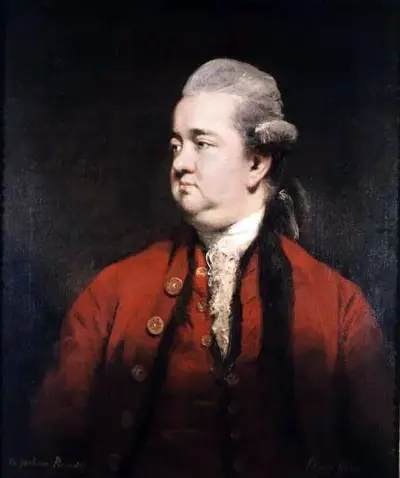
Edward Gibbon FRS was an English historian, writer and Member of Parliament. His most important work, The History of the Decline and Fall of the Roman Empire, was published in six volumes between 1776 and 1788 and is known for the quality and irony of its prose, its use of primary sources, and its polemical criticism of organised religion.
