Elias Cornelius Boudinot Quotes
The surrender of Lee and Johnson virtually puts an end to the war on the other side of the river. The people from Virginia to the Mississippi River are willing to try the experiment of absolute submission and return to the old Union. General Smith in my opinion will hold on if possible a month or two yet, until the hopelessness of further resistance is apparent to the world, before he will yield the contest. From all that I learn his army will fall to pieces. The war will close in some shape by the 1st day of August
The slavery issue also split the Cherokee. A number of the wealthier old families had and worked Black Slaves and they supported the South officially and militarily. Waite, the recipient of the letter, was a Confederate General.
Elias Cornelius Boudinot, 1835-1890, Cherokee Indian Attorney & Cherokee delegate to the Confederate Congress, Letter to his uncle, Stand Waite, May 11, 1865
Sourced by: Eigen's Political and Historical Quotations


On his deathbed he claimed to Kelly that he had been offered command of the Army of the Potomac but was not willing to "pay the price" which he claimed was to accept the terms. Pleasonton, always more of a bureaucrat than an ideologue or strong leader, like many Union officers, only wanted to defang the South so that they could not threaten the rest of the states but was not convinced that "crushing" the rebels was worth the cost or that slavery or the reelection of Lincoln was worth it. There is no independent verification of his receiving the offer, but what is more likely was as the Cavalry Commander of the Army of the Potomac he was "sounded out" on the subject.

Wade was one of the Radical Republicans who advocated a much more vigorous prosecution of the Civil War effort in the North. It is important for two reasons: First, it illustrates the position of the “Hawks” who constantly pressured Lincoln to counter the Democrat lack of enthusiasm for the fighting. Many believed that the South would come to its senses and end the rebellion. Second and more important, this is one of the quotations that apologists for the South during the Jim Crow segregation issue use to show that there was a strong desire to impoverish the South. This is partly true. Wade and the other radicals did argue to impoverish the South only so long as they were continuing the war and rebellion. They did not argue that the South should be impoverished after the war was over. However, the reality was that the Southern economy had become so dependent on slave labor, that after Emancipation, it was very difficult to rebuild the Southern Economy. With Slavery Southern Cotton sold to England was cheaper than Egyptian Cotton. If labor had to be paid, the Egyptian cotton became cheaper. The South had squandered almost all of their capital resources on financing the war and had no capital to finance modern manufacturing enterprises. And they so resented Northerners that it was very difficult for Northern businessmen who did have capital to start and finance enterprises in the South. There also was little money for good public schools after the war, and the inferior education of the South made the situation very hard to change.


In 1877 Gen. O. O. Howard and 600 men fought Chief Joseph and his Nez Perce warriors near Kamiah, Idaho. Outnumbered and outflanked, Chief Joseph headed his band toward the Canadian border, but before they reached it they were captured. Chief Joseph's surrender speech was recorded by General Howard's adjutant: Thunder Rolling Down the Mountain

Two days later Lee surrendered at Richmond, and the Civil War was over. On April 14, Lincoln was assassinated. He died the next day.
The quotation is actually combined from two different speeches, July 28 and August 21, 1725. The dependency on guns and gunpowder was one of the key elements that was creating the dependency. See {613048}.

The American Civil War was followed by intellectuals throughout the world. Most were offended by the immorality of the slavery that the South was fighting to maintain, but admired the way they organized and fought for their principles.

Committee of the Congress. This was the prevailing Congressional and public view except for the South which had coalesced around an intellectual rationalization. See {618013}.
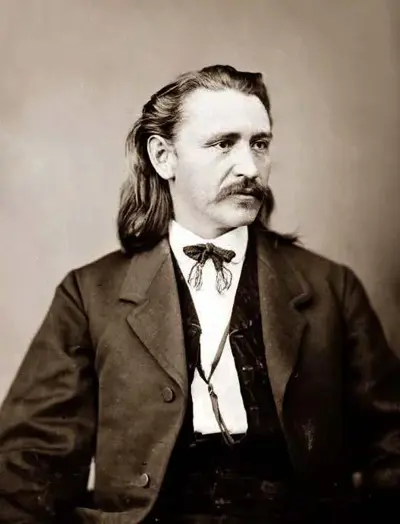
Elias Cornelius Boudinot (Cherokee) was an attorney and politician who served as a military officer in the Confederate States of America during the American Civil War. Chosen as a delegate to the Arkansas secession convention, Boudinot served as a colonel in the Confederate States Army, and as the non-voting Delegate from the Cherokee Nation to the Confederate Congress.
