Oliver Cromwell Quotes
The State, in choosing men to serve it, takes no notice of their opinions. If they be willing faithfully to serve it, that satisfies.
Oliver Cromwell, 1599-1658, Revolutionist, Ruler, & Lord Protector of England, Statement, July 2, 1644
Sourced by: Eigen's Political and Historical Quotations

He was reacting to President Donald Trump's demands of Personal Loyalty of his appointees. Trump was a businessman who ran provate (not public) corporations where it was not unusual for the owner to demand personal loyalty of all his key employees. He had not historical knowledge of experience with public service in America where, unlike campaigns, all officials take an oath of loalty to the Constitution and the nation and not to the President. Trump had fired the then FBI Director who was investigationg his campaign for illegal contacts with the Russians, which Trump regarded as an act of disloyalty, especially when the Director refused to pledge his loyalty to Trump.


After the United States Military victory at the Beginning of the Iraq War, the Bush administration operated under the neoconservative view that the Iraqis wanted a democracy and freedom and saw the occupation and reconstruction of Iraq as an opportunity to apply extreme conservative principles in the construction of a modern democracy in the Middle East. Bush appointed one of his political supporters and conservative ideologue as the head of the occupation authority and almost all of the many positions to rebuild Iraq was filled with conservative ideologues almost all of whom had no previous practical experience in the area of their new responsibility, and had not diplomatic skills or experience in Iraq, the Middle East. Almost none spoke Arabic or knew anything about Islamic culture. The occupation was a disaster, and the deadly phase of the Iraq war broke out.

This law established the Civil Service Commission and for the first time in American History required open examinations for the appointing of government employees. Japan had required examinations for civil service for hundreds of years. President Garfield had called for such legislation in his inaugural address {586804} 2 years earlier. This was the legislation that implemented it.

The rotation-in-office principle, first introduced by Jefferson, brought this observation from the then Secretary of State:


I did not come here to make a cabinet for the ladies of this place [Washington], but for the nation.
The President's nominee for Secretary of War, John H. Eaton, produced much opposition on the grounds that Eaton's wife was rumored to be a "loose" woman.


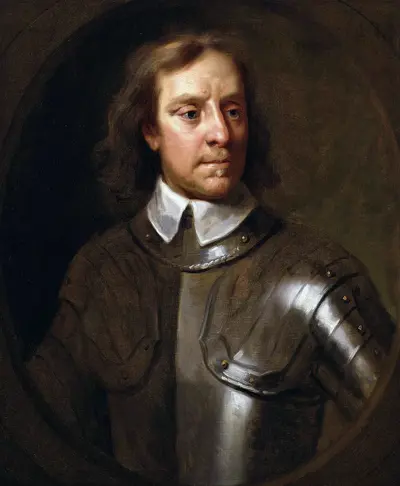
Oliver Cromwell was an English general and statesman who, first as a subordinate and later as Commander-in-Chief, led armies of the Parliament of England against King Charles I during the English Civil War, subsequently ruling the British Isles as Lord Protector from 1653 until his death in 1658. He acted simultaneously as head of state and head of government of the new republican commonwealth.
