Han Fei Quotes
The intelligent ruler makes the law select men and makes no arbitrary appointment himself; he makes the law measure merits and makes no arbitrary judgment himself.
Han, Fei. Han Feizi: Basic Writings. Translated by Burton Watson, Columbia University Press, 2003, p. 24.


This document was a type of Magna Carta but far earlier.


He was discussing the military criminal cases ongoing regarding the mistreatment of Iraqi detainees.

She was a judge before she had been a member of Congress.

Most Americans would with this characterized their own judges. This is the most formalized and sophisticated compendium of laws of the so-called “barbaric peoples” of Europe. The compilation was in many ways a documentation of the traditional laws of the Visigoths that had evolved over hundreds of years.

The Senator was arguing against a bill to correct an aspect of the immigration law where infants and very young clildren are broght to the United States by parents who entered illegally. The children grow up in the United States—the only country and home that they have ever known. American law required that they be deported to “their countries” which they have no memory of and many do not even speak the language or know the culture. Sessions, is an example of the view that law defines justice. Therefore laws cannot be unjust nor can enforcing the law. Opponents point out that even in the United States we have, in earlier times, “enforced the law” which we came to regret and see as an injustice. The Fugitive slave laws, the Southern racial discrimination laws, and the law allowing Japanese American Citizens to be interned and lose their land during WWII are a few examples of laws, the enforcement of which is seen by most Americans as having been unjust. The execution of “witches” in early America was in conformity with the law.


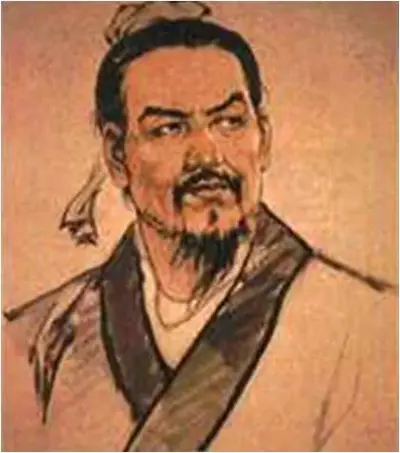
Han Fei (/hɑːn/; traditional Chinese: 韓非; simplified Chinese: 韩非; pinyin: Hán Fēi; c. 280 – 233 BC), also known as Han Fei Zi, was a Chinese philosopher or statesman of the Legalist school during the Warring States period, and a prince of the state of Han.
