John Quincy Adams Quotes
Eustis has republican principle enough to admire rotation-in-office, and patriotism enough to serve his country as collector of customs at Boston. Dearborn is equally patriotic but not just now so much an admirer of rotation. This principle is, indeed, more congenial to republicans out of than to those in office.
The rotation-in-office principle, first introduced by Jefferson, brought this observation from the then Secretary of State:
John Quincy Adams, 1767-1848, 6th President of the United States (Independent, MA), Diary, February 21, 1821
Sourced by: Eigen's Political and Historical Quotations


Urging a boycott of the South African election:


Theodore Roosevelt was the Presidential nominee

Once he assumed the Presidency however, he flip flopped on this issue and approved prosecution of the Drake case and other whitle blowers. At the beginning of his second term, Edward Snowden, tried to get his superiors to do something about the massive surveillance of the American Public that the intelligence agencies were carrying out in secret. When Snowden was ignored, he went public through two newspapers. Obama castigated him for revealing that the government officials had lied and were operating a secret spying and eavesdropping system monitoring virtually every American. The Obama Administration chased him around the world trying to get him extradited for criminal trial in the United States.

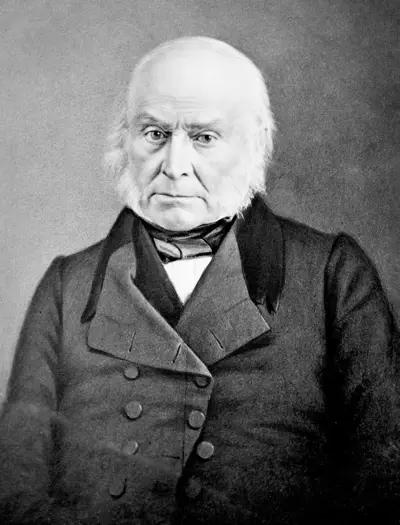
John Quincy Adams was an American statesman, diplomat, lawyer, and diarist who served as the sixth president of the United States, from 1825 to 1829. He previously served as the eighth United States Secretary of State from 1817 to 1825. During his long diplomatic and political career, Adams also served as an ambassador, and as a member of the United States Senate and House of Representatives representing Massachusetts. He was the eldest son of John Adams, who served as the second U.S. president from 1797 to 1801, and First Lady Abigail Adams. Initially a Federalist like his father, he won election to the presidency as a member of the Democratic-Republican Party, and in the mid-1830s became affiliated with the Whig Party.
