Rand Paul Quotes
The Stamp Act was a direct tax imposed on the colonies by King George III. This act inevitably led to the American Revolution. Just as the Stamp Act did in 1765, Obamacare should act as a wake-up call. Chief Justice Roberts provides us with a similar call to action.
Paul, Rand. "Obamacare Ruling is a Call to Action." CNN, 28 Jun. 2012.

This is the same man who introduced the Stamp Act 12 years before which started the whole problem in America. See {74956}.


This is one of the most fascinating documents of the American Revolution. The British Parliament had passed the very unpopular Stamp Act, a form of tax that required a government stamp, which had to be paid for, to be placed on all legal documents from leases to wills. Governor Bernard opposed the Stamp Act and was trying to have the Colonies exempted (See {613881}). The assembly while apparently advocating obedience to the law and warning the Governor of the possibility of Colonists boycotting legal instruments, actually laid out the strategy and the legal defense for a boycott and provided a revolutionary blueprint for colonists to follow.

Some of the Patriots of Early America realized that the oppressions of British rule were coming from Parliament and initially took the position that only the King could make laws for the colonies and not Parliament. Therefore, they were as Englishmen challenging illegal English laws. Most American hostility was directed at Parliament and not the King. However, once there was any physical resistance, King George came down with such a heavy hand that American hatred transferred to him. For related quotes on the King/Parliament issue, see {639145}, {639143}, {639142}, {639141}, {639140}, & {639137}

It was repealed the next year, but much damage had been done to the relationship between the American Colonists and the mother country. It set the tone for American transition to a desire for independence. . Fox, a conservative on most issues was an absolute radical on the issue of America. To aggravate the hawks in parliament, he used to dress in the colors of George Washington’s uniform to show his support once the war broke out.

A number of the British Parliament were opposed to using force to get America to accept British taxation and other rules. They thought the trade with America was excellent for both, and the military advantage of the combination was superior to any force on earth. To upset that over who had the right to tax and under what conditions seemed foolish. They counseled negotiations. It was thought at the time that Lord North, the Prime Minister, was perceived to be a hard liner who would not back down regarding America. This quotation describes papers that the professor found that proved that Lord North was not one of the hawks and did not want to send troops to America. However, the King was insistent as he and his hawkish advisors felt that England and the king would be weakened if the world could see America flouting the king. It was a “domino theory” of the effect on all the colonies. North wanted to resign but the king thought him the only competent man in the kingdom who could manage the government and would not allow North’s resignation. The Prime Minister, as a loyal servant of the King, executed the policy he thought unwise and used his political skill to marshal and maintain a majority for a hard line in Parliament. Apparently, he tried to resign over America on several occasions. The world would be very different place had he successfully resigned.

At the beginning of the dispute between America and England, the issue was the raising of internal American taxes by Parliament without any American representation in Parliament. The issue escalated and when the British began using force, independence then became the American objective.


This letter drafted by Adams was sent by the Congress complaining about the Closing of Boston Harbor. The letter was right about the consequences except for the last; the rift between American and the mother country was not only healed but there is no European nation that has been closer to the United States over the years.

The Parliament was debating the reaction to the Stamp Act by the American Colonies. One of the members, reflecting a majority view, asked sarcastically when the American Colonies had been emancipated so that they could make their own independent decisions. Pitt then hit this one out of the park by reversing the question.

Arnold wrote this document to justify his treason. The reality was that in the beginning of the war he was one of the best and bravest of the American generals and was the likely replacement for George Washington should anything happen to him. However, he had been involved in some financial improprieties, and was disciplined. He felt unappreciated by his fellow officers and joined the British side. He attempted to justify his action be saying that the revolutionaries had already won the rights of Englishmen and the taxation and other issues for which they had fought. However, by this time total independence had become a goal for most Americans although at the beginning of the dispute that had been only the goal of some.

The fear of civil war amongst the colonies if they were free from Britain was substantial.

Americans were by no means united in wanting to take up arms against Britain. Relatively few of the loyalist quotations have come down to us, but here is one. It also illustrates why some Americans wanted complete independence: So that they could escape their debts to English merchants. Most however had more noble and unselfish motives. As a matter of fact, the American Revolution is unusual in the sense that there were so many men of substance who sacrificed much of their material wealth for the American ideal. There were also the rogues and opportunists as Galloway describes.


The French were carefully watching the events in the American Colonies.

This was one of the first and is considered the best of the Colonial writings against taxation without representation. Despite this, Dulany is not well known in American history because when the Revolution finally came he was a loyalist.
This was one of the first and is considered the best of the Colonial writings against taxation without representation. Despite this, Dulany is not well known in American history because when the Revolution finally came he was a loyalist.

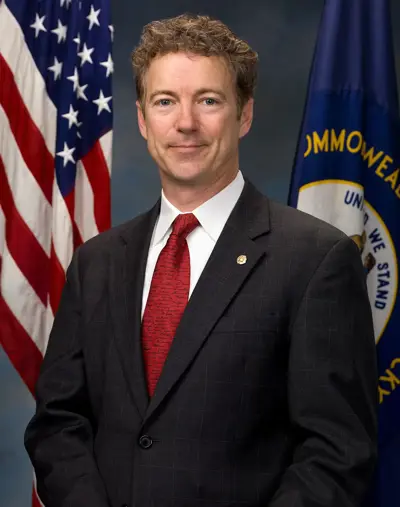
Randal Howard Paul is an American physician and politician serving as the junior United States Senator from Kentucky since 2011. He is the son of former three-time presidential candidate and twelve-term U.S. Representative of Texas, Ron Paul.
