Benedict Arnold Quotes
Fellow Soldiers and Citizens, that I find solid Ground to rely upon the Clemency of our Sovereign, and abundant Conviction that it is the generous Intention of Great Britain, not only to have the Rights and privileges of the Colonies unimpaired, together with their perpetual exemption from taxation, but to superadd such further benefits as may consist with the Common prosperity of the Empire. In short, I fought for much less than the Parent Country is as willing to grant to her Colonies, as they can be to receive or enjoy. Some may think I continued in the struggle of those unhappy days too long, and others that I quitted it too soon.
Arnold wrote this document to justify his treason. The reality was that in the beginning of the war he was one of the best and bravest of the American generals and was the likely replacement for George Washington should anything happen to him. However, he had been involved in some financial improprieties, and was disciplined. He felt unappreciated by his fellow officers and joined the British side. He attempted to justify his action be saying that the revolutionaries had already won the rights of Englishmen and the taxation and other issues for which they had fought. However, by this time total independence had become a goal for most Americans although at the beginning of the dispute that had been only the goal of some.
Benedict Arnold, 1741-1801, Revolutionary War Major General & Traitor, To the Inhabitants of America, October 7, 1780
Sourced by: Eigen's Political and Historical Quotations

This is the same man who introduced the Stamp Act 12 years before which started the whole problem in America. See {74956}.


The resolution was transmitted to the Provincial Congress on June 6, 1775 where it was tabled. Essentially this position was taken by the Continental Congress and General Washington—See {614018}—and then Washington reversed himself, {614220}

See {641497} for a quote from the Grenville speech. Fox, a conservative on most issues was an absolute radical on the issue of America. To aggravate the hawks in parliament, he used to dress in the colors of George Washington’s uniform to show his support once the war broke out.

Ministers refers to the Government Ministers, not to clergy.

At the beginning of the dispute between America and England, the issue was the raising of internal American taxes by Parliament without any American representation in Parliament. The issue escalated and when the British began using force, independence then became the American objective.

This resolution of independence was voted upon a month before the Declaration of Independence. It was approved by 12 of the colonies but not by New York. The Congress appointed a committee to draft what became the Declaration of Independence and that was approved by all the colonies. The resolution was introduced by Richard Henry Lee on instructions from Virginia. The graphic is of Lee’s original notes.


The fear of civil war amongst the colonies if they were free from Britain was substantial.
The fear of civil war amongst the colonies if they were free from Britain was substantial. There were a number of potential conflict flash points of which slavery was one. See {619100}
At the time, the United States wanted as many Mexicans as citizens as they could get—so much so that if Mexicans in the new American territories did not elect American Citizenship within 1 year, they became American Citizens automatically.


This is one of the most fascinating documents of the American Revolution. The British Parliament had passed the very unpopular Stamp Act, a form of tax that required a government stamp, which had to be paid for, to be placed on all legal documents from leases to wills. Governor Bernard opposed the Stamp Act and was trying to have the Colonies exempted (See {613881}). The assembly while apparently advocating obedience to the law and warning the Governor of the possibility of Colonists boycotting legal instruments, actually laid out the strategy and the legal defense for a boycott and provided a revolutionary blueprint for colonists to follow.


This was one of the first and is considered the best of the Colonial writings against taxation without representation. Despite this, Dulany is not well known in American history because when the Revolution finally came he was a loyalist.

It was repealed the next year, but much damage had been done to the relationship between the American Colonists and the mother country. It set the tone for American transition to a desire for independence. . Fox, a conservative on most issues was an absolute radical on the issue of America. To aggravate the hawks in parliament, he used to dress in the colors of George Washington’s uniform to show his support once the war broke out.

This resolution was the trigger that began the debate which became the Declaration of Independence.

Christie was a Tory—a British supporter, but what he did that was so offensive was that he had requested that British Troops come to Maryland to control the rebellion.
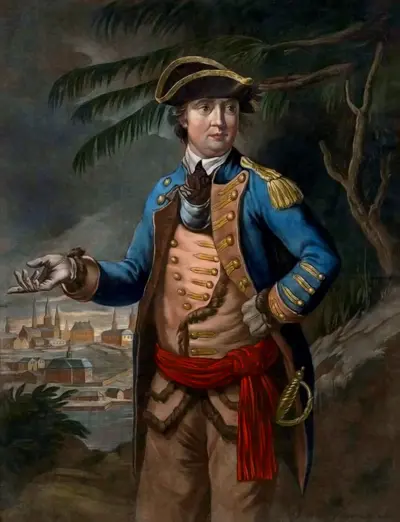
Benedict Arnold was an American military officer who served during the Revolutionary War. He fought with distinction for the American Continental Army, rising to the rank of major general, before defecting to the British side of the conflict in 1780. General George Washington had given him his fullest trust and placed him in command of West Point, New York. Arnold planned to surrender the fort to British forces, but the plot was discovered in September 1780 and he fled to the British lines. Arnold received a commission as a brigadier general in the British Army, commanding the American Legion in the later part of the conflict. Arnold's name quickly became a byword in the United States for treason and betrayal because he led the British army in battle against the very men whom he had once commanded.
