John Witherspoon Quotes
For what would it signify to risk our possessions and shed our blood to set ourselves free from the encroachments and oppression of Great Britain—with a certainty as soon as peace was settled with them of a more lasting war, a more unnatural, more bloody, and much more hopeless war, among the colonies themselves? Some of us consider ourselves as acting for posterity at present, having little expectation of living to see all things fully settled and the good consequences of liberty taking effect. But how much more uncertain the hope of seeing the internal contests of the colonies settled upon a lasting and equitable footing?
The fear of civil war amongst the colonies if they were free from Britain was substantial. There were a number of potential conflict flash points of which slavery was one. See {619100}
John Witherspoon, 1723-1794, Presbyterian minister, President of Princeton University, Member of the Continental Congress (NJ) & Signer of the Declaration of Independence, Debate in the Continental Congress
Sourced by: Eigen's Political and Historical Quotations

Many New Yorkers and others felt that since the attack on the World Trade Center was made in the name of Islam, the mosque and commuity center should be built in another location further from Ground Zero. Ellison was debating someone who argued that the Mosque should not be built so that sensitivity can be shown for those New Yorkers who lost relatives and friends in the attack of September 11. Rather than insist on their Constitutional rights, the Muslim leadership of the project, moved the location somewhat further away from Ground Zero.


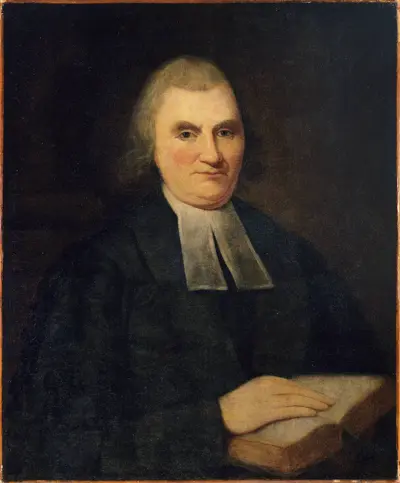
John Witherspoon was a Scottish American Presbyterian minister and a Founding Father of the United States. Witherspoon embraced the concepts of Scottish common sense realism, and while president of the College of New Jersey (1768–1794; now Princeton University), became an influential figure in the development of the United States' national character. Politically active, Witherspoon was a delegate from New Jersey to the Second Continental Congress and a signatory to the July 4, 1776, Declaration of Independence. He was the only active clergyman and the only college president to sign the Declaration. Later, he signed the Articles of Confederation and supported ratification of the Constitution. In 1789 he was convening moderator of the First General Assembly of the Presbyterian Church in the United States of America.
