Plutarch Quotes
The Spartans do not inquire how many the enemy are, but where they are.
Plutarch, c. 46-c. 120, Greek Historian & Biographer, Laconic Apothegms
Sourced by: Eigen's Political and Historical Quotations

Although jihad was a duty of Muslims, it was not a duty to die in a fight against overwhelming odds which was determined to be 2 to 1. So 2 Muslims could run from 4 but not 3.


This is one of the great examples of putting positive spin on a negative situation.


He was a strong believer in surprise attack and preemption.


The Germans and Americans did this as a standard practice. The French “history” to which the General referred did not involve machine guns and mortars. The entrenching tool (shovel) was a fundamentally important piece of equipment to the Germans and Americans but not the French at the beginning of WWI. Later in the war, the French finally learned.


Although the two men differed on a very important issue, each admired the other and acquitted themselves politely throughout. Congress explicitly gave the President the powers that he had exercised and won the dispute. But Dixon had also won, and upheld the law as it existed until it was changed.

Some say that President Roosevelt had instructed the war department to issue warnings to the military forces in the Philippines and the Pacific. Military intelligence argued against the Japanese attack on the Philippines—and did not think any attack anywhere very likely. When the president insisted, warnings went out and this is what was sent to General Short. The warning was ambiguous and Short did very little and was caught unprepared shortly thereafter. How much reliance should be placed on intelligence estimates has been a question that has been argued before World War II and after.


As an educational and military leader, he saw the importance of each in a nation’s welfare.


Referring to Lincoln's Secretary of War, Edwin M. Stanton, who was a forceful administrator constantly telling all others what to do:
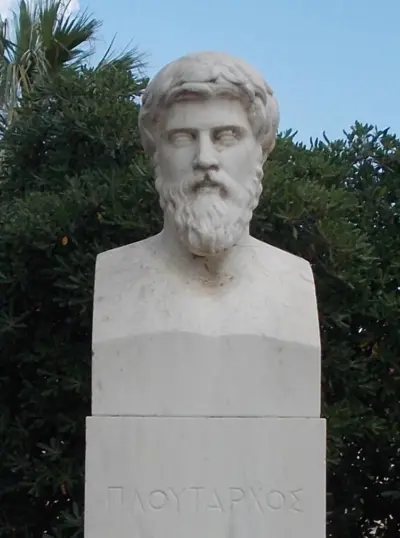
Plutarch (/ˈpluːtɑːrk/; Greek: Πλούταρχος, Ploútarchos; Koine Greek: [ˈplutarkʰos]; AD 46–after AD 119) was a Greek Middle Platonist philosopher, historian, biographer, essayist, and priest at the Temple of Apollo. He is known primarily for his Parallel Lives, a series of biographies of illustrious Greeks and Romans, and Moralia, a collection of essays and speeches. Upon becoming a Roman citizen, he was named Lucius Mestrius Plutarchus (Λούκιος Μέστριος Πλούταρχος).
