Maurice Gustave Gamelin Quotes
The idea of organizing any kind of defense aroused an almost innate repugnance. Digging into the earth was believed to be a dishonorable gesture for loyal fighters who in their heart of hearts wanted to offer themselves up to danger with their chests exposed. It was an instinctive thing, which seems to have passed down to our age of machines and merciless economic warfare from the reckless chivalry of Agincourt of the elaborate graces of Fontenoy.
The Germans and Americans did this as a standard practice. The French “history” to which the General referred did not involve machine guns and mortars. The entrenching tool (shovel) was a fundamentally important piece of equipment to the Germans and Americans but not the French at the beginning of WWI. Later in the war, the French finally learned.
Maurice Gustave Gamelin, 1872–1958, French General, Explaining the reluctance of the WWI French troops to dig trenches whenever they stopped marching., Quoted in Max Hastings, Catastrophe: Europe Goes To War 1914, 2013
Sourced by: Eigen's Political and Historical Quotations


Trumbo was morally opposed to war. He also refused to name Hollywood communists to Congressional Committees during the Red Scare. He was then blacklisted from his occupation, screen writing.

An example of this was the landing in the beaches of Normandy in WWII. Once on the beaches the allied troops had to win or die. Some of the most heroic fighting in American and English military history occurred on those beaches. Another was the Spanish Explorer Hernando Cortez who after landing in the New World, had his ships burned so that he and his soldiers had to conquer or they would die.

On October 31, 1803, Tripolitan forces captured the ship Philadelphia and imprisoned the whole crew. The Pasha (provincial governor) of Tripoli, Yusef Karamanli demanded that the United States not only pay a ransom for the prisoners but an annual tribute to Tripoli.

Lacedaemonian refers to the ancient Greek city of Sparta,


There was deep hostility and suspicion between Germany and England for several years before WWI. See {642066}.


This is one of the great examples of putting positive spin on a negative situation.


Ataturk was a young major at the time commanding troops of a weak and corrupt Ottoman regime. However a combined English and French (the strongest military powers in Europe) invasion of the Gallipoli Peninsula threatened to capture the Turkish capital, Constantinople. Ataturk alone rallied the Turkish defenders and fought the invaders to a standoff in long drawn out battle with huge casualties on both sides. Ataturk became a national hero. Although Ataturk thereafter was very reluctant to use military force or endanger troops, the thing he always thought worth the supreme sacrifice (including his own) was the independence and sovereignty of the nation. See {584502} for his continuing belief in this type of sacrifice.


This is not the most common view military view which tends to place the senior officers out of harm’s way as they are “too valuable” to become casualties. Among modern armies, Israel stands out as having the same leadership doctrine as Genghis Khan. Those who attack Israel and lose, never have their commanders at the front of the battle. Israel does.

The American Army had just liberated Bellau Wood, but had lost almost 8,000 men.
This would be like an American President firing the congressional chaplains. However this is only one small, but telling, example of Atatuk’s secularization of the nation which had a great deal to do with Turkey becoming a modern great power—by far the strongest and most developed of the Islamic world.


He had been asked by a reporter if his Marines would be able to take Baghdad in the American invasion of Iraq, 2007. Kelly commanded the Marines charged with taking Baghdad. They did.


The Shakers were an American religion and pacifists Lincoln learned. He was so impressed with their sincerity and way of life that he exempted Shaker men from the draft—the first conscientious objectors formally recognized in America. However, Lincoln made the statement to the Shakers which greatly impressed them and caused much reflection. Quakers had been pacifists also, but until the Civil War Draft there was no mechanism to test.

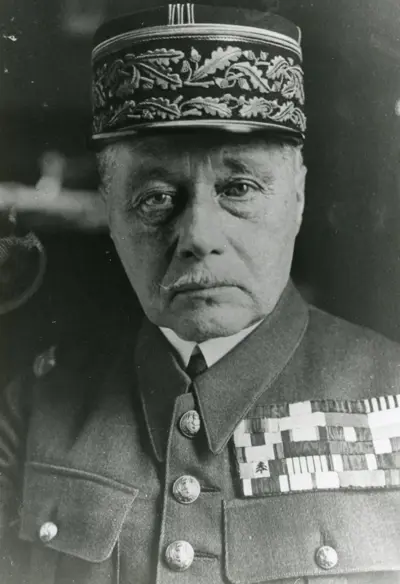
Maurice Gustave Gamelin was an army general in the French Army. Gamelin is remembered for his disastrous command (until 17 May 1940) of the French military during the Battle of France (10 May–22 June 1940) in World War II and his steadfast defence of republican values.
