Genghis Khan Quotes
I am always in front, and in time of battle am never behind.
This is not the most common view military view which tends to place the senior officers out of harm’s way as they are “too valuable” to become casualties. Among modern armies, Israel stands out as having the same leadership doctrine as Genghis Khan. Those who attack Israel and lose, never have their commanders at the front of the battle. Israel does.
Genghis Khan, c.1162 - 1227, Mongolian King, Ruler, and Military Leader, His view on a leader’s place in battle
Sourced by: Eigen's Political and Historical Quotations

An example of this was the landing in the beaches of Normandy in WWII. Once on the beaches the allied troops had to win or die. Some of the most heroic fighting in American and English military history occurred on those beaches. Another was the Spanish Explorer Hernando Cortez who after landing in the New World, had his ships burned so that he and his soldiers had to conquer or they would die.


Reports were widespread that General Grant was an alcoholic and was frequently drunk in the field. Lincoln was under pressure to relieve Grant of his command in the West. To a Pennsylvania politician he explained:

This has been attributed to Mussolini, most recently when this quote was tweeted by Donald Trump who was accused of repeating the words of the fascist dictator. This phrase was first used as a slogan by Italian solders in 1918 at the Battle of the Piave River during World War I. It was also written on the walls of many homes in the area to encourage each other during the battle.


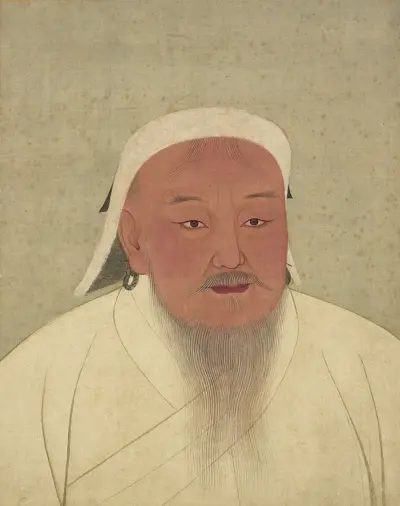
Genghis Khan, was the founder and first Great Khan (Emperor) of the Mongol Empire, which became the largest contiguous empire in history after his death. He came to power by uniting many of the nomadic tribes of Northeast Asia. After founding the Empire and being proclaimed Genghis Khan (an honorary title possibly derived from the Turkic "tengiz" — sea, meaning "the oceanic, universal ruler"), he launched the Mongol invasions that conquered most of Eurasia, reaching as far west as Poland in Europe and the Levant in the Middle East. Campaigns initiated in his lifetime include those against the Qara Khitai, Khwarezmia, and the Western Xia and Jin dynasties, and raids into Medieval Georgia, the Kievan Rus', and Volga Bulgaria. These campaigns were often accompanied by large-scale massacres of the civilian populations, especially in the Khwarazmian and Western Xia-controlled lands. Because of this brutality, which left millions dead, he is considered by many to have been a brutal ruler. By the end of his life, the Mongol Empire occupied a substantial portion of Central Asia and China. Due to his exceptional military successes, Genghis Khan is often considered to be one of the greatest conquerors of all time.
