Book of Mark Quotes
The Sabbath was made for man, and not man for the Sabbath.
New Testament, Mark 2:27
Sourced by: Eigen's Political and Historical Quotations


In effect this was one of the earliest civil Blue Laws.


At the time, the chief executive of these states were called Presidents because they presided over the legislature as well. This proclamation was issued before the Constitutional Convention in 1787 and the later ratification separating church and state. However, even after the Constitution was ratified some states continued to use state law to enforce the Christian Sabbath. That practice would continue in some places until the 2nd half of the 20th century.


Philip II, by this statement, and his subsequent behavior, made a major step forward in France for the separation of church and state. Previously, French kings played a major part in the selection of the bishops and other high clerics of the realm. Phillip ceased that type of interference. He did however, close down a religious commune for misbehavior, but that was at the request of both the church and civil authorities. See {617074} . The religious authorities at the time were delighted with this form of separation of church and state, but they were adamant that their church should be able to influence the monarchy and laws of the realm. In contrast today, the Chinese government does not allow any religion to interfere with the operation of the government, but insists that the Dali Lama and the Bishops of the Catholic church can only be appointed with their approval. Separation of church and state is a two way phenomenon.


Shabbat is the Hebrew word for the Sabbath. In Israel there is conflict between ultra-orthodox Jews on the one side and secular Jews, Christians and Arabs on the other regarding store openings and closings on Saturday—the Jewish Sabbath. The orthodox want the power of the state to force stores to close on the Sabbath. The others want the freedom of the individual to either close or open a store, to shop or not to shop, to keep Friday as the Sabbath as the Muslims do, Saturday as the Jews and a few Christian sects do, or Sunday as most Christians do. This used to be a major issue in the United States. Local communities all had what were called “Blue Laws” that controlled the Sabbath. The courts however found these unconstitutional and these issues have disappeared as political issues in America.


Epic Historical Poet. Noteworthy is the Poem in that it shows the king fighting with his Christian and Pagan supporters. His conversions were not forced and he managed to govern and fight without religion being the societal cleavage—rather it was nationality and culture and in this sense he was somewhat ahead of his time.
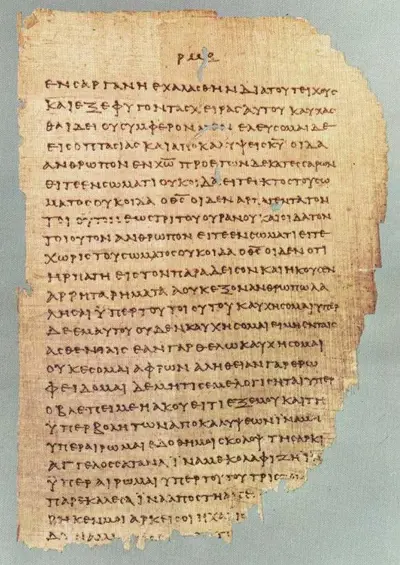
The Gospel according to Mark (Greek: Εὐαγγέλιον κατὰ Μᾶρκον, romanized: Euangélion katà Mârkon), also called the Gospel of Mark, or simply Mark, is the second of the four canonical gospels and of the three synoptic Gospels. It tells of the ministry of Jesus from his baptism by John the Baptist to his death and burial and the discovery of Jesus' empty tomb. There is no miraculous birth or doctrine of divine pre-existence, nor, in the original ending (Mark 16:1-8), any post-resurrection appearances of Jesus. It portrays Jesus as a heroic man of action, an exorcist, a healer, and a miracle worker. He is also the Son of God, but keeps his messianic nature secret, with even his disciples failing to understand him. All this is in keeping with prophecy, which foretold the fate of the messiah as suffering servant. The gospel ends, in its original version, with the discovery of the empty tomb, a promise to meet again in Galilee, and an unheeded instruction to spread the good news of the Resurrection of Jesus.
