Edward Gibbon Quotes
The ruin of Paganism, in the age of Theodosius, is perhaps the only example of the total extirpation of any ancient and popular superstition; and may therefore deserve to be considered, as a singular event in the history of the human mind.
Gibbon, Edward. The History of the Decline and Fall of the Roman Empire. W. Strahan and T. Cadell, 1776-1789.

Shahin’s empire which he conquered for Khosrow II comprised all of the Middle East into parts of India. The Byzantine Roman Empire controlled everything from Constantinople to the West. They were the two “superpowers” of the day. Shahin was attacking various Byzantine holdings outside of the city of Constantinople. Even before Islam, religion was a major conflict between East and West.

It was uttered in the King’s name by soldiers and officials throughout the land. It is not certain that the exact words of choice were created by Louis but they were uttered in his name. Protestants had been given the right to practice their religion in France by the King’s grandfather (the Edict of Nantes {617664}), but Louis XIV rescinded that {617765} and gave Protestants this choice. Some converted. Some were murdered. Some escaped to other countries.
In some countries political candidates run on religious platforms to convert the part of the population that is not of their religion and turn the nation into a theocracy.


Flaccus


Admiral Coligny was a leading French Protestant. He was murdered along with 50,000 Protestants by the French Catholics in what has come to be known as Massacre of Saint Bartholomew. Earlier in his career Pius V had been the an inquisitor or the Inquisition and was appointed “Inquisitor General For All Christendom,” so he had an anti-Protestant background. Incredibly enough, he was beatified and canonized a saint despite—some say because of—his participation in and encouragement murders of non-Catholics and even Catholics who happened to dissent on some aspect of theology. It is not clear whether the Pope knew in advance of the planned massacre or whether he or his representatives had any part in the planning of it. Since the end of the Second World War, Popes have been in the forefront of protest and moral condemnation of religious or ethnic atrocities, and it is hard for most of us to conceive that a Pope could countenance the murder of 50,000 souls by his faithful followers.

The implication of a double moral standard for adherents of the faith and for others has been characteristics of many religions.

This argument—that Christians were more cruel and uncivilized than heathens in some respects was very persuasive to many serious white Christians who began to see slavery and the slave trade in a new light.

Damn this world, Damn this time. Damn this fate That uncivilized Arabs have come to make me a Moslem
This is a huge epic poem that he wrote over several years. At the time, the Persians considered themselves far more civilized and sophisticated than the Arabs who were but tribesmen. They really resented the fact that it was the Arabs that brought Islam. And before, most of the Persians worshipped Zoroaster. Although Islam spread faster and further than any religion in history, it was not always easily accepted as this stanza of the poem indicates. There is to this day a superiority that the Iranians perceive over the Arabs. And to this day, many Arabs resent the Iranians for this attitude.


Samuel Langhorne Clemens, 1835-1910

In the early stages of Islam, Muhammad had hoped to convert the Jews and others on the Arabian Peninsula. When they refused to be converted, he warred against them usually killing the men, and taking the women and children as slaves. The result was that non-believing tribes were “cleansed” from the Arabian Peninsula. The Muslims at the time preferred children as slaves. For then they could convert the children against their will. Adults in Islam must accept Islam in order to convert. Children are regarded as having no such maturity of decision making and therefore opposition to conversion may be ignored and they may be forced. Critics of Islam and those who argue that Islam is at odds with all other religions point to this quotation. They claim that it is the only religion whose founder and fundamental scriptures demand war against others for no other reason than that they believe in a different religion. The Catholic Church during the Crusades and the Inquisition had a similar philosophy as did Christian missionaries colonizing Africa later. One difference is that most Christians today repudiate the doctrine as against the true spirit and teachings of Christ and view it as historical error, while very few modern Muslims repudiate this quotation of the Prophet.

Note that the learned men who wrote the Chronicle accepted the notion that “fiery dragons were seen flying in the sky”. In another 1000 years, who knows what we observe today that will be laughed at by our progeny. The quotation also demonstrates that historical primary sources are not necessarily reliable because they were sometimes written by men and women with primitive outlook who accepted certain things without critical analysis.


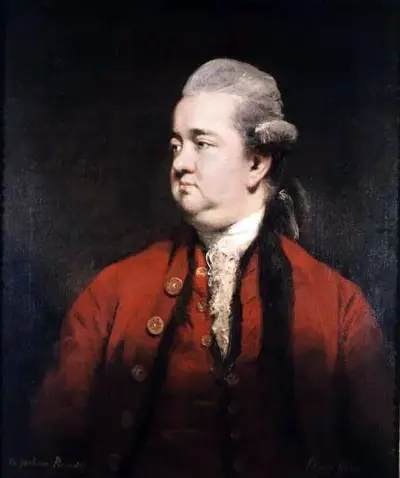
Edward Gibbon FRS was an English historian, writer and Member of Parliament. His most important work, The History of the Decline and Fall of the Roman Empire, was published in six volumes between 1776 and 1788 and is known for the quality and irony of its prose, its use of primary sources, and its polemical criticism of organised religion.
