Georgi Valentinovich Plekhanov Quotes
• The right to vote and be elected to the Legislative Assembly as well as to the provincial and communal self-government bodies.
• A money payment fixed by law for the representatives of the people, which will allow them to be elected from the poorest classes of the population.
• Universal, civil, free and compulsory education, the state being obliged to provide poor children with food, clothing and school requisites.
• Inviolability of the person and home of citizens.
• Freedom of movement and of employment.
• Complete equality of all citizens irrespective of religion and racial origin.
• The replacement of the standing army by general arming of the people.
RSD Party platform. The Russian Social Democratic Party was in 1887 a very modern democratic party inside the feudalism of Tsarist Russia. The Tsar and the nobility thought them wild radicals and yet their party platform was not only reasonable, but in large part influenced by the American Constitution, Bill of Rights, and then current practices in America. It is hard to believe but at the time a Russian could not work at an occupation he chose but could only do the work that was permitted by the aristocrat who owned the land he lived on. The Tsar, Alexander III, was a terrible autocrat, unlike his father who had desired some reform and abolished serfdom. All efforts at any kind of Democratic reform were put down, and Russian reformers in this party tended to split between those who still hoped for reform and those who saw violent revolution as the only hope. By 1906 the party which had no success at any of their planks of reform had split into two main subgroups—the Mensheviks and the Bolsheviks—both active revolutionary groups, but the Mensheviks tended to be more democratic and moderate and wanted to include the workers and the middle class whereas the Bolsheviks saw the middle class as part of the problem and argued for a more radical political structure. The real split occurred after the 1917 revolution when the Mensheviks lost popularity among the Russian revolutionists as not being radical or realistic enough in what it would take to transform Russia. The Bolsheviks gained control and by 1921, they had outlawed and purged the Menshevik party. That was the last hope of democracy in Russia, as the Bolsheviks model was that which guided the country until the fall of the Soviet Union.
Georgi Valentinovich Plekhanov, 1856-1918, Leader of Russian Social Democrat Parry, Russian Historian & Political Analyst, later, Founder of the Russian Menshevik Party, (Short-Lived Opposition to the Bolsheviks after the Russian Revolution), Draft of the Planks in the platform of the Russian Social Democrats (1887).
Sourced by: Eigen's Political and Historical Quotations


This was a classic debate over universal male suffrage. Rainborough had made a forceful argument for equality as a spokesperson for the Levellers in this famous debate. Ireton (See {619711}) eloquently gave the classic counter-argument that property owners had much more at stake and therefore should have much more of a say on governmental affairs. Early America actually sided with Ireton but modern America holds with Rainborough.

This was the first major civil rights speech. He had previously in his political career tread carefully in the civil rights arena. The Southerners had disproportionate control over the Congressional committee chairmanships and they could hold up his entire legislative agenda. JFK’s father was a right wing fascist who supported Hitler earlier and always advised against pushing civil rights.


Note the early use of the term “March on Washington.” See {625658}.


This is one of the earliest and most eloquent argument for an end to racial discrimination. Burchard argued for giving Blacks the right to vote. While Wisconsin was vehemently opposed to slavery, the convention decided to not include or preclude Negroes from voting and instead left the issue up to later legislatures.


This platform was not very different from those of many democratic political parties at the time. It was on this sort of basis that the German Nazis were elected. However the last sentence of this quotation turned out to be the undoing of the German people and most other people throughout Europe. The “common good” always was interpreted to be the good of the Nazi government which had been elected as against the individual god—the rights of the individual. Soon the state had all the rights and individuals, none. And no other political force could contest and election as that was not in the interest of the common weal.

Before America, many political thinkers believed that popular sovereignty and liberty are incompatible concepts—that the tyranny of the majority would trample liberty of all kinds of minorities: intellectuals, the wealthy, different religion, smaller religions, original thinking, cultural independence. However, Mandelbaum’s theory is that the social safety net, makes everyone wealthy to enough an extent that most will not trample others liberties for an even greater wealth. Inequality of wealth is tolerable if all have a modicum of a standard of living, but if some or many do not even have that, other’s liberties are less important than their own survival.


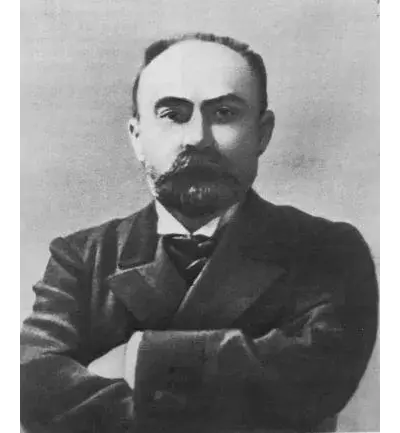
Georgi Valentinovich Plekhanov was a Russian revolutionary, philosopher and Marxist theoretician. He was a founder of the social-democratic movement in Russia and was one of the first Russians to identify himself as "Marxist". Facing political persecution, Plekhanov emigrated to Switzerland in 1880, where he continued in his political activity attempting to overthrow the Tsarist regime in Russia. Plekhanov is known as the "father of Russian Marxism".
