Arthur Compton Quotes
The reward for using the atom's power towards man's welfare is great and sure. The punishment for its misuse would seem to be death and the destruction of the civilization that has been growing for a thousand years.
Arthur Holly Compton, 1892-1962, Nobel Laureate in Physics, Chairman of the National Academy of Sciences Committee to Evaluate Use of Atomic Energy in War, Atomic Quest: A Personal Narrative, 1956
Sourced by: Eigen's Political and Historical Quotations


There had been so much nuclear activity—military and civilian—that he thought it inevitable, either by intention or accident, that there would be some catastrophes. Chernobyl and the crash of a nuclear bomb equipped plane in Spain destroyed the two areas for years thereafter proved him prescient but fortunately none of the “incidents” were bad enough to affect millions of people significantly although the damage of Chernobyl is still being discovered.


This declaration, drafted by Russell and Einstein two days before Einstein’s death was signed by a number of other prominent scientists.


He was the first man to see the experimental evidence of nuclear power and he realized that it had the potential for an incredibly powerful weapon. It was his message about the possibilities about the atomic bomb that Albert Einstein transmitted to FDR, leading to American development of the bomb.(See {624449}.) By the time the atomic bomb had been developed, Germany had surrendered and Szilard and others felt that there was no longer a need to beat the Germans to the development. So he went from the biggest enthusiast to the most serious opponent.

Germany had some world class physicists. Our scientists, military intelligence people, and political leadership assumed that the Germans were also seeking to develop the Atomic Bomb. Ironically, it turned out that they were not, and what Truman reported in this quotation was untrue (although that was not fully known at the time.) Einstein and several of the scientists who were early pioneers in modern physics were Jewish, and Hitler referred to the study of nuclear fission and fusion as “Jewish Science.” As a result, the German government did not commit the resources to the development of an atomic bomb. Instead, they were betting on the development of the Jet Airplane which they succeeded in deploying against the Allies at the end of the war. But they did not have enough or enough pilots left alive to fly them, and Germany was overrun by the Allied Troops. Prior to Truman’s erroneous report about the German development of an atomic bomb, there had only been one piece of evidence that the Germans were not developing one. An OSS secret agent, Moe Berg, had talked with Werner Heisenberg, at a Swiss scientific conference during the war. He was going to assassinate the greatest of the German physicists if Berg thought he was working on a nuclear device. Berg concluded from his discussions that Heisenberg did not know enough about nuclear fission to have been working on that. Berg did not kill Heisenberg, and reported that he did not think the Germans were developing a bomb as if they were Heisenberg would have been deeply involved. However, the American intelligence people and the American scientists, did not trust Berg’s analysis and conclusion. Berg was not a trained scientist. He was a professional baseball player—the NY Yankee backup catcher to Bill Dickey. He was a college graduate, a brilliant guy and a very fast learner who had studied physics books and papers before his assignment. Berg turned out to have been right, but that was not confirmed until a few years after the war. Truman had relied on an incorrect intelligence estimate when he made this quotation. It was not the first such error of intelligence analysis in American history and it would not be the last.


One new danger that nuclear powers add to the usual problems of conflict, is that a nuclear power, about to lose a war in a humiliating way, might just use his nuclear weapons in revenge. So much damage will be done that the victory turned out to have been a bad thing. So ironically, with a nuclear enemy. Your military dare not win to dominantly with conventional weapons.


he cupped his two hands Fermi was the scientist who organized and planned the first controlled nuclear chain reaction

The lecture was on radium and the radioactivity that scientists had recently discovered. This appears to be the first time a scientist suggested the possibility of using atomic energy to produce a powerful weapon. At the same time, note that he also mentioned the possible destruction of the earth. “Heavy matter” referred to the elements—many of which had not yet been discovered—that had larger atomic numbers than radium like uranium.


The background of the statement was Iraq and Saddam Hussein.
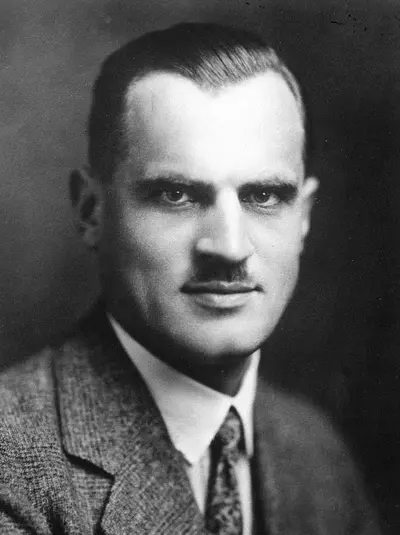
Arthur Holly Compton was an American physicist who won the Nobel Prize in Physics in 1927 for his 1923 discovery of the Compton effect, which demonstrated the particle nature of electromagnetic radiation. It was a sensational discovery at the time: the wave nature of light had been well-demonstrated, but the idea that light had both wave and particle properties was not easily accepted. He is also known for his leadership over the Metallurgical Laboratory at the University of Chicago during the Manhattan Project, and served as Chancellor of Washington University in St. Louis from 1945 to 1953.
