Harry S. Truman Quotes
I realize the tragic significance of the atomic bomb. Its production and its use were not lightly undertaken by this Government. But we knew that our enemies were on the search for it. We know now how close they were to finding it. And we knew the disaster which would come to this Nation, and to all peace-loving nations, to all civilization, if they had found it first. That is why we felt compelled to undertake the long and uncertain and costly labor of discovery and production. We won the race of discovery against the Germans.
Germany had some world class physicists. Our scientists, military intelligence people, and political leadership assumed that the Germans were also seeking to develop the Atomic Bomb. Ironically, it turned out that they were not, and what Truman reported in this quotation was untrue (although that was not fully known at the time.) Einstein and several of the scientists who were early pioneers in modern physics were Jewish, and Hitler referred to the study of nuclear fission and fusion as “Jewish Science.” As a result, the German government did not commit the resources to the development of an atomic bomb. Instead, they were betting on the development of the Jet Airplane which they succeeded in deploying against the Allies at the end of the war. But they did not have enough or enough pilots left alive to fly them, and Germany was overrun by the Allied Troops. Prior to Truman’s erroneous report about the German development of an atomic bomb, there had only been one piece of evidence that the Germans were not developing one. An OSS secret agent, Moe Berg, had talked with Werner Heisenberg, at a Swiss scientific conference during the war. He was going to assassinate the greatest of the German physicists if Berg thought he was working on a nuclear device. Berg concluded from his discussions that Heisenberg did not know enough about nuclear fission to have been working on that. Berg did not kill Heisenberg, and reported that he did not think the Germans were developing a bomb as if they were Heisenberg would have been deeply involved. However, the American intelligence people and the American scientists, did not trust Berg’s analysis and conclusion. Berg was not a trained scientist. He was a professional baseball player—the NY Yankee backup catcher to Bill Dickey. He was a college graduate, a brilliant guy and a very fast learner who had studied physics books and papers before his assignment. Berg turned out to have been right, but that was not confirmed until a few years after the war. Truman had relied on an incorrect intelligence estimate when he made this quotation. It was not the first such error of intelligence analysis in American history and it would not be the last.
Harry S Truman, 1884-1972, 33rd President of the United States (Democrat, MO), Radio Address to the Nation, 1945
Sourced by: Eigen's Political and Historical Quotations

One new danger that nuclear powers add to the usual problems of conflict, is that a nuclear power, about to lose a war in a humiliating way, might just use his nuclear weapons in revenge. So much damage will be done that the victory turned out to have been a bad thing. So ironically, with a nuclear enemy. Your military dare not win to dominantly with conventional weapons.


The second atomic bomb had just been dropped.

When the doubts began to be expressed, the scientists were briefed on the planned invasion of the Japanese mainland and the military medical preparations for treating and caring for ½ million serious wounded casualties. In addition, given the state of war, there was expected about the same number of American Military deaths. On top of that, there would be many more Japanese military casualties plus even more Japanese civilian deaths and wounded. The use of the Atom Bomb would save all those lives but have casualties of its own, but far fewer. At the time, surprising to most people now, the use of the atomic bomb was not an issue of controversy at all. There were no Congressman who questioned it, no newspapers which editorialized against the use of the bomb. There were not even any other counties which protested its use.

At the time, Pakistan was the only nuclear nation that was very unstable and full of terrorist groups which the government nor the military could control and in some cases even wanted to control. A takeover by militant Islamic terrorists was a possibility or the acquisition of one of the nuclear weapons byr terrorists was then a possibility. India, the United States, and other countries were very concerned.


The Scientific Project that developed the Atomic Bomb. The focus of the scientists had been to beat the German’s who were terribly evil might develop a bomb first. After the defeat of some scientists began to have concerns about their purpose. Most were very distrustful of the army and believed little of what they were told, by the military at Los Alamos. However, in a remarkable our de force of leadership, Oppenheimer had the trust of virtually all of the staff. This memo and a briefing of the invasion plans of mainland Japan (see {629858} ) convinced the scientist to maintain their intense and punishing pace.


Perez was a virulent racist who was the strongest political boss in Louisiana. Perez wanted to maintain segregation despite any Federal Court orders, and if the Federal Government would send Federal Marshalls or Federal Troops to enforce desegregation court decision, he would have the Louisiana State Police keep them out or the state, even if it came to a shooting battle. The Governor used this quotation to talk him out of the idea.

As the atomic bomb evolved to the hydrogen bomb and the test results were learned by political and military leaders, the perception of the danger became much greater, especially when the Russians and French also developed their nuclear weapons. After that, and Einstein’s predictions about the cost and quantity, leaders in the world all became conscious of the danger of Mutually Assured Destruction (MAD), most leaders realized that it was impossible see atomic weapons as anything but defense.

There were some doubts the scientists developed after Germany had surrendered as Hitler had been their greatest fear. So they were briefed on the planned invasion of the Japanese mainland and the military medical preparations for treating and caring for ½ million serious wounded casualties. In addition, given the state of war, there was expected about the same number of American Military deaths. On top of that, there would be many more Japanese military casualties plus even more Japanese civilian deaths and wounded. The use of the Atom Bomb would save all those lives but have casualties of its own, but far fewer. At the time, surprising to most people now, the use of the atomic bomb was not an issue of controversy at all. There were no Congressman who questioned it, no newspapers which editorialized against the use of the bomb. There were not even any other counties which protested its use.
This was his last publication. He died of a heart attack as the magazine was being printed. Since this was written one other possible use of nuclear weapons has been suggested—namely, retaliation for a biological attack. From a policy point of view, maintaining an arsenal of biological weapons for retaliatory purposes is dangerous and use for retaliation of biological weapons is not very controllable and arguably less humane than a nuclear weapon. His point however still holds. We have to have a national defense policy against many threats and we have to have defense policies that handle all these without nuclear tactics is insufficient to handle any of the threats without causing more problems and we have other weapons and techniques that are just as, if not more, effective. They and systems under development have the major role in our current defense policy.
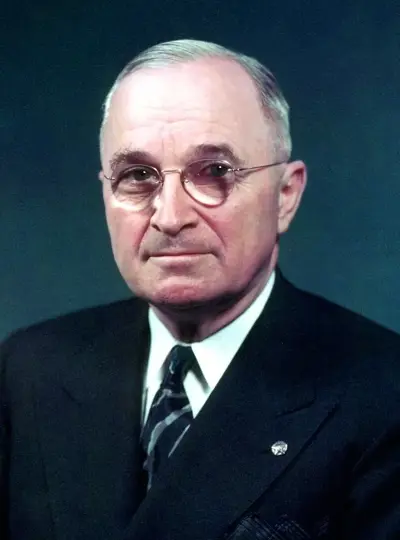
Harry S. Truman was an American politician who served as the 33rd President of the United States (1945–53). He served as a United States Senator from Missouri (1935–45) and briefly as Vice President (1945) before he succeeded to the presidency on April 12, 1945 upon the death of Franklin D. Roosevelt. He was president during the final months of World War II, and approved the plan to drop atomic bombs on Hiroshima and Nagasaki. Truman was elected in his own right in 1948. He presided over an uncertain domestic scene as America sought its path after the war and tensions with the Soviet Union increased, marking the start of the Cold War.
