Queen Victoria Quotes
The Queen returns these communications to Sir James Graham, which are of a very unpleasant nature. The Queen trusts that measures of the greatest severity will be taken, as well to suppress the revolutionary spirit as to bring the culprits to immediate trial and punishment. The Queen thinks this of the greatest importance with respect to the effect it may have in Ireland, likewise as proving that the Government is willing to show great forbearance, and to trust to the good sense of the people; but that if outrages are committed and it is called upon to act, it is not to be trifled with, but will visit wrong-doers with the utmost severity.
The queen was reacting to the so called “Rebecca Riots” in Ireland. She was a very gentle and forebearing woman, but if pressed and the government was in her view in the right, she would crack down on seriouslawbreakers. This balance is one of the hardest things for a ruler to attain and she was masterful at it.
Victoria Alexandrina, 1819-1901, [Queen Victoria], Queen of Great Britain and Ireland & Empress of India, Letter to Sir James Graham, June 23, 1843
Sourced by: Eigen's Political and Historical Quotations

Several years before the Battle of Bunker Hill, revolutionary activity had already broken out in the American colonies—See {634132} for an example. This law gave the British authorities much more “clout” in dealing with the “seditious” American activities. It protected English law enforcement officials from being tried in local Colonial courts for murder or assault in putting down insurrections. George Washington and other Patriots were outraged over this law. See {634131}.


those engaging in civil disobedience This was written in Scotland before Witherspoon emigrated to America. A major issue of political and religious debate at the time in Scotland was civil disobedience. “Reform” religious advocates argued for the moral propriety of civil disobedience where the protester’s conscience felt that the laws were immoral and unjust. The were referred to as “Moderates.” Witherspoon, early in his career, was one of the conservatives who argued then, against the Moderates, that civil disobedience should be punished very severely. The conservative rhetoric at the time sarcastically referred to protestors as having “tender consciences.” The issue was contentious then, later in America, and is so even today.

Terror conceptually in France and some other countries was the tool the government used to inhibit criminals.


In a Chicago labor demonstration at the Haymarket a bomb killed several policemen. Fisher and his colleagues were anarchists who had printed a pamphlet the previous day advocating the demonstration and urging violence against the authorities in retaliation for the police-caused death of demonstrators the day previous. When the police were killed, Fisher and his colleagues were arrested, tried, and convicted of murder even though they were not even present at the scene. Several, including Fisher, were hanged before Governor Altgeld commuted the sentences of the other Haymarket “conspirators.” See {43713}


The revolution turned on many of its initiators including Vergniaud. He was guillotined along with other Girondists.


Part of the Soviet Union


The “foreign tribes” were the English and other European traders who were bringing opium to China. Lin had assembled a fleet of 80 ships at the mouth of the Pearl River to persuade the European powers that they would fight if the foreign ships would not cease trading in opium. The British in particular were not intimidated, and they militarily forced the Chinese to accept their “right” to sell opium. The Emperor sent Lin to the “boondocks”—see {621320} for misjudging and provoking British military action, but Lin is remembered for his sound moral and public health perspective. A bronze statue of Lin Zexu was erected in his honor in Chatham Square (Kimlau Square) of New York City's Chinatown and many other places in the world.

James was a Catholic King and did not like Protestants but positively detested Puritans. He made good his and “harried them out of the land” much to the benefit of the American colonies to which they immigrated and the detriment of England. Many of the immigrants to America came for the religious freedom, but in the early days, no sooner did they arrive and become the majority, than they began to discriminate against other religions.
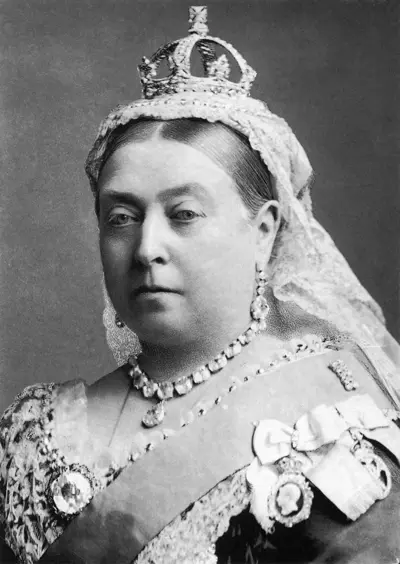
Victoria was Queen of the United Kingdom of Great Britain and Ireland from 20 June 1837 until her death in 1901. Known as the Victorian era, her reign of 63 years and seven months was the longest of any British monarch until surpassed by that of Elizabeth II. It was a period of industrial, political, scientific, and military change within the United Kingdom, and was marked by a great expansion of the British Empire. In 1876, Parliament voted to grant her the additional title of Empress of India.
