Benjamin Disraeli Quotes
[The Queen and the rest of the royal family, together with much of the nation, wanted the government to take action to blunt the Tsarist Russian expansionism. Prime Minister Disraeli had his own time-table for dealing with Russia. He was invited to a private royal dinner and found himself seated next to Princess Mary of Cambridge who asked him at the first opportunity, “I cannot imagine what you are waiting for?” Potatoes, at this moment, Madam.
1st Earl of Beaconsfield. Disraeli kept to his own timetable and had a complete and brilliant diplomatic victory over the Russians without losing a single British soldier.
Benjamin Disraeli, 1804-1881, British Prime Minister (Tory), Response to Princess Mary, 1878
Sourced by: Eigen's Political and Historical Quotations

American official foreign policy had been officially isolationist—to not get involved in the squabbles and fights of other nations. Angell however pointed out that even before WWII, America had formally been involved in 6 foreign wars and used military incursions on foreign soil on almost 100 occasions.

The Crises to which he was referring were the rapidly increasing hostility between Japan and the United States, Britain, and Russia. The very heavily military influence and participation in the government produced a very aggressive foreign policy of expansion in Asia. Sato resigned after two months in office, and served as a senior diplomat thereafter. Towards the end of the war with America & Britain, he was selected as the Japanese diplomat to try and keep Russia out of the war and assist with a negotiated peace. However, by the time he was authorized to approach Russia, the Japanese military situation was so bad that it was clear to the Russians that Japan could not win, so they joined the Allies, declaring was against Japan. After the war, he was one of the few Japanese political figures who had both moral credibility with the Allies and the respect of the Japanese people. He was appointed President of a group of diplomats that would advise the Japanese Parliament regarding foreign affairs.


“Picaninnies” is a derogatory term for Blacks.


See {636935}for the policy decision that triggered this order.

They were both children of Queen Victoria of England.

His definition of Russian territory included any area that the Czars claimed which included Poland, the Baltic States, the Ukraine, the Caucuses, but at the time of the speech, Russia was fighting to keep its existing territory.

This quotation is a good example of how tolerant some nations can be in terms of maintaining diplomatic relations and trade relations with other countries. The American and English governments chose to simply protest and condemn the slanderous statement but decided that the Prime Minister was pandering to his political local Islamic base, so took no further action and kept open diplomatic relations. Mahathir had a history of being very accusatory of the West with respect to anything that affected the Arab Muslims. The number of Muslims killed by the Americans and British in the Iraq War was very small compared to the huge number of Muslims killed by other Muslims in their Sunni Shiite civil war. While Bush and Blair both generated support for the Iraq invasion by making claims of WMD development in Iraq that were false, it is not clear whether or not they knew their statements were false, should have known that they were false, created an atmosphere against Iraq that was likely to produce false accusations, or were simple misled by poor intelligence. Mahathir, of course, chose to assume the worst case, and claim it was true, which is what many people think Bush and Blair did in analyzing the intelligence on Iraq.

The Dutch Monarch William V, Prince of Orange, was in a very precarious position and might be deposed. Officially Harris and the British were supporting him and Harris was giving him money to firm up his regime, but their great fear was that the French would support and control the Patriot Revolutionary movement, then quite active or even intervene militarily to aid the Patriots.


After the breakup of the Soviet Union, NATO expanded to include some fo the former Soviet Nations thus moving NATO territiry to the East--closer to Russia, whose leaders percieved that the expansion was hostile and dangerous for the indpendence of Russia. What made the situation more complex is that the American Secretary of State, when the Soviet Union was very powerful, had made an agreement with the Soviets that in return for Russian aquiessance of NATO being extended to East Germany, NATO would not expand further West. But after the collapse of the Soviet Union, Russia was quite weak and NATO expanded east despite the earleir comittment. The US and th eother NATO counties took the pozition the previous comitmnts were not binidng as they were never formally signed. The Russians then decided to take a hard line position and flaunt and use military force to which would stop the Western expansion closer to the Russian border.
Theis was the phrase he used to describe the collapse of the Soviet Union. This and other statements he made about the breakup of the Russian empire, together with his actons reagading foreign affairs, led many Western observers to think that Putin was trying to build up Russia to be amajor World Power as it was relatively recently. This annual address to the Duma has the importance of the United States' President with the State of the Nation Address. Every phrase and sentence is very carefully crafted. Also see Quotation 644184 under Related Quotes foir a more explicit statement,

Meiji the Great

A few months later, that is exactly what Germany did. She was hoping that England would not enter the war despite her treaty obligations, but she was willing to risk the possibility. The Czar had a strong espionage and intelligence service active in Germany, but, like so many other intelligence failures, the intelligence operatives and analysts had military and economic facts but had little understanding of the German culture which propelled Germany to what to most other cultures was “irrational policy making.” People and nations often engage in irrational activities, even against their own self-interest.

Washington was describing the British strategy at the start of the war. The expectation was not only that of the British high command in America but was the prevailing expectation in the Court, Parliament, and the media in London. British critics of the military strategy point to this as a key reason the British lost the war in the end. Instead of waiting for the American troops to fall apart during the hard winter and gain a cheap and easy victory, the critics argue that the British should have initiated full scale attacks on the weakened and ill provisioned American soldiers.


Tito often did not support Soviet policies, but in the case of the Hungarian Revolution he did. He saw Hungary was split into pro and anti Communist factions in the midst of the Cold war. He and the Russians feared that if the Hungarians were allowed to settle their own dispute, there would be a protracted civil war with neither side strong enough to win rapidly. If this happened, the Russians were treaty bound to provide arms and other assistance to the Communist Hungarian government. And if they did so, it was very likely that NATO and the United States would supply similar assistance to the Hungarian Revolutionaries. The result would surely involve enormous loss of Hungarian lives on both sides, and the clear risk of an East West clash that would lead to a World War that might be nuclear. Russian troops and tanks rolled into Hungary and the conflict was over in a few days with very little loss of life. Therefore, even though Hungary lost its independence and freedoms, it was a necessary evil in Tito’s view.
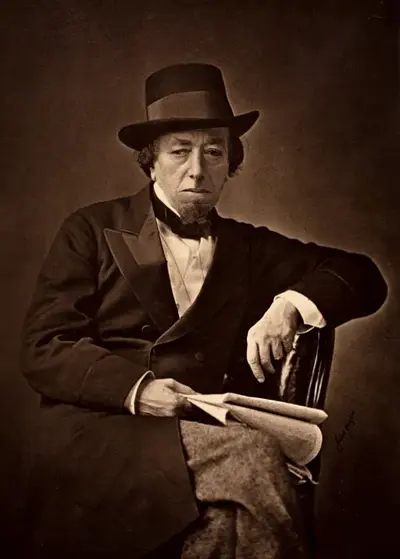
Benjamin Disraeli, 1st Earl of Beaconsfield, KG, PC, MP, FRS, was twice Prime Minister of the United Kingdom, serving in 1868 and from 1874 to 1880. He was a member of the British Conservative Party and played a central role in the creation of the modern Party, defining its policies and its broad outreach. Disraeli is remembered for his influential voice in world affairs, his political battles with the Liberal Party leader William Ewart Gladstone, and his one-nation conservatism or "Tory democracy". He made the Conservatives the party most identified with the glory and power of the British Empire. He is the only British prime minister to have been of Jewish birth. He was also a novelist, publishing works of fiction even as prime minister.
