Dwight D. Eisenhower Quotes
The proper role of government, however, is that of partner with the farmer -- never his master. By every possible means we must develop and promote that partnership -- to the end that agriculture may continue to be a sound, enduring foundation for our economy and that farm living may be a profitable and satisfying experience.
Eisenhower, Dwight D. "Special Message to the Congress on Agriculture." January 11, 1954. Public Papers of the Presidents of the United States: Dwight D. Eisenhower, 1954, Office of the Federal Register, 1960, p. 25.

There were many new scientific agricultural techniques emerging but most farmers knew nothing about them. Garfield wanted the Federal Government to provide education, communications and technical assistance to farmers. However, that was a radical notion and many did not see that as a proper role of the Federal Government. The President gave the example of an early Federal role of establishing lighthouses to protect and assist mariners sailing along the American coasts. Most Americans had accepted helping the maritime industry. Why not assist agriculture? The subsequent Federal role in Agriculture was one of the major factors in making the American farmer the most productive in the world as new techniques would be communicated to farmers rapidly and implemented without much delay.


Executed by the English for his part in the Easter Uprising. This was a creative idea to being technology to bear on small farms. America was exploring cooperatives and other devices of trying to allow people who were not rich and had little or not capital, to utilize the emerging technology that would be so important.

Inscribed in the South Lunette of the Library of Congress


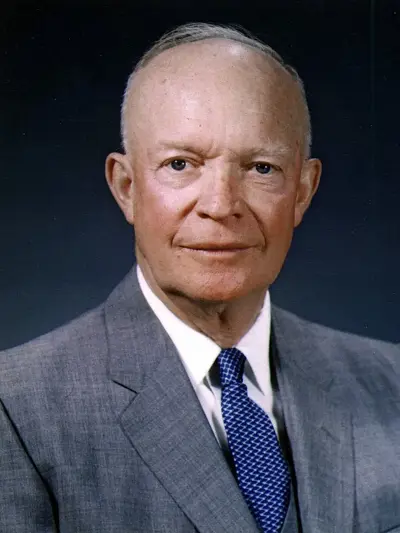
Dwight David "Ike" Eisenhower GCB OM GCS CCLH KC NPk was an American military officer and statesman who served as the 34th president of the United States from 1953 to 1961. During World War II, he became a five-star general in the Army and served as Supreme Commander of the Allied Expeditionary Force in Europe. He was responsible for planning and supervising the invasion of North Africa in Operation Torch in 1942–43 and the successful invasion of Normandy in 1944–45 from the Western Front.
