George Washington Quotes
... in the present State of America, our welfare and prosperity depend upon the cultivation of our lands and turning the produce of them to the best advantage.
Washington, George. "To the Philadelphia Society for Promoting Agriculture, 31 March 1789." The Papers of George Washington, Presidential Series, vol. 1, edited by Dorothy Twohig, University Press of Virginia, 1987, p. 471.

The word “proprietor” at the time meant someone who had title to land. The title was then almost always tied up with the aristocratic titles. “Great proprietors” were therefore nobles who owned and controlled large land holdings. The “improvers” tended to be the businessmen—especially the manufacturers and the transportation magnates. Large landowners could just make money by renting parts of their land to tenant farmers. They needed no capital, no vision, not much skill or talent, and they didn’t have to take any risks.


There were many new scientific agricultural techniques emerging but most farmers knew nothing about them. Garfield wanted the Federal Government to provide education, communications and technical assistance to farmers. However, that was a radical notion and many did not see that as a proper role of the Federal Government. The President gave the example of an early Federal role of establishing lighthouses to protect and assist mariners sailing along the American coasts. Most Americans had accepted helping the maritime industry. Why not assist agriculture? The subsequent Federal role in Agriculture was one of the major factors in making the American farmer the most productive in the world as new techniques would be communicated to farmers rapidly and implemented without much delay.

The same is true of almost all the inventers, scientists, and creators ot technology. They are more influential in the long run for more people than the Generals and Politicians.


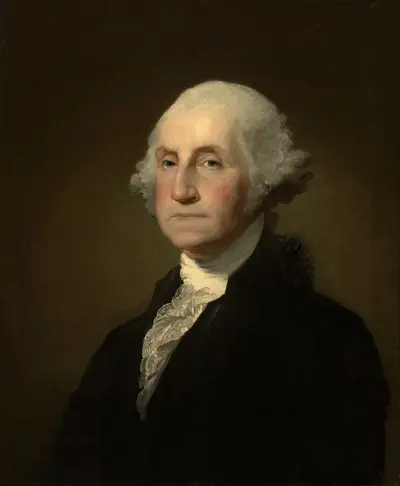
George Washington was the first President of the United States (1789-97), the Commander-in-Chief of the Continental Army during the American Revolutionary War, and one of the Founding Fathers of the United States. He presided over the convention that drafted the current United States Constitution and during his lifetime was called the "father of his country".
