Max Ludwig Henning Delbruck Quotes
The progress of science is tremendously disorderly, and the motivations that lead to this progress are tremendously varied.
Scientific breakthroughs depend on genius, circumstances, the work of others and serendipity. None of these are very predictable which is why it is do difficult to manage a scientific enterprise and be accountable for any results. See {624867}.
Max Ludwig Henning Delbruck, 1906–1981, Biophysicist and Nobel laureate, Oral History Interview, 1978
Sourced by: Eigen's Political and Historical Quotations

This quotation illustrates a way in which science is frequently at odds with politics. Our politicians realize the importance of scientific research to our standard of living, economy, and quality of life. So they want to support research and development programs. However, budgeting and planning for these in terms of expected or desired results is virtually impossible. So scientific research, especially basic research is not susceptible to the usual planning and monitoring that is so common and effective in construction projects or other applications of science and technology. It is hard to predict when and which scientists will have the next critical idea. It is very difficult to hold scientists or administrators accountable for scientific research results because of this factor. See {624876}.


Sir Humphry was a religious man, and yet he focused on one of the great differences between science and religion. The latter is presumed true and eternal by its faithful, while science is never such. No truth is eternal in science and rarely does a scientific “truth” last 100 years without modification, elaboration or additional complexity. This is one of the reasons that scientists make poor witnesses at Congressional hearings. They are never certain of anything if they are good scientists. Witnesses from other fields testify with much more certainty as they are motivated by self interest or ideology where doubt is unacceptable.


Von Braun never really did any basic research, and although a brilliant engineer and technologist who was instrumental in rocket development, he never made any contribution to science. Basic research has the greatest long term benefit and effect on human knowledge and standard of living, but applied science can have more short range utility.

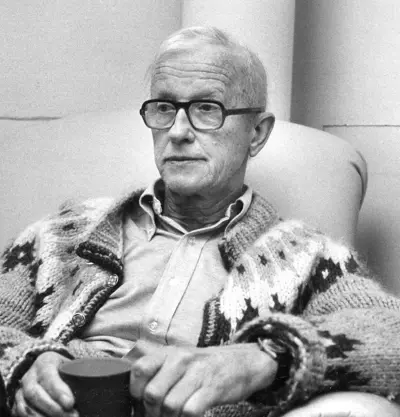
- Born: September 4, 1906
- Died: March 9, 1981
- Nationality:
- Profession:
Max Ludwig Henning Delbrück, a German–American biophysicist, helped launch the molecular biology research program in the late 1930s. He stimulated physical scientists' interest into biology, especially as to basic research to physically explain genes, mysterious at the time. Formed in 1945 and led by Delbrück along with Salvador Luria and Alfred Hershey, the Phage Group made substantial headway unraveling important aspects of genetics. The three shared the 1969 Nobel Prize in Physiology or Medicine "for their discoveries concerning the replication mechanism and the genetic structure of viruses". He was the first physicist to predict what is now called Delbrück scattering.
