Humphry Davy Quotes
Nothing is so fatal to the progress of the human mind as to suppose that our views of science are ultimate; that there are no mysteries in nature; that our triumphs are complete, and that there are no new worlds to conquer.
Sir Humphry was a religious man, and yet he focused on one of the great differences between science and religion. The latter is presumed true and eternal by its faithful, while science is never such. No truth is eternal in science and rarely does a scientific “truth” last 100 years without modification, elaboration or additional complexity. This is one of the reasons that scientists make poor witnesses at Congressional hearings. They are never certain of anything if they are good scientists. Witnesses from other fields testify with much more certainty as they are motivated by self interest or ideology where doubt is unacceptable.
Humphry Davy, 1778–1829, English Chemist, Quoted in David Knight, Humphry Davy: Science & Power
Sourced by: Eigen's Political and Historical Quotations


Scientific breakthroughs depend on genius, circumstances, the work of others and serendipity. None of these are very predictable which is why it is do difficult to manage a scientific enterprise and be accountable for any results. See {624867}.


It was not very long before there was no scientific field any longer in which any human being could learn everything that is known. Sherrington was one of the first to see that coming.


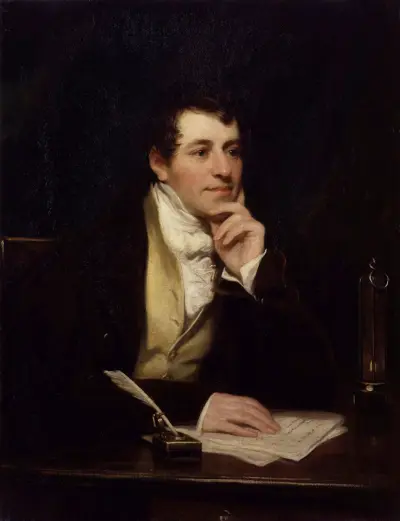
Sir Humphry Davy, 1st Baronet PRS MRIA FGS FRS was a Cornish chemist and inventor who invented the Davy lamp and a very early form of arc lamp. He is also remembered for isolating, by using electricity, a series of elements for the first time: potassium and sodium in 1807 and calcium, strontium, barium, magnesium and boron the following year, as well as for discovering the elemental nature of chlorine and iodine. Davy also studied the forces involved in these separations, inventing the new field of electrochemistry.
